
My Kid Won’t Get Off His Tablet, and I’m Kind of Losing My Mind
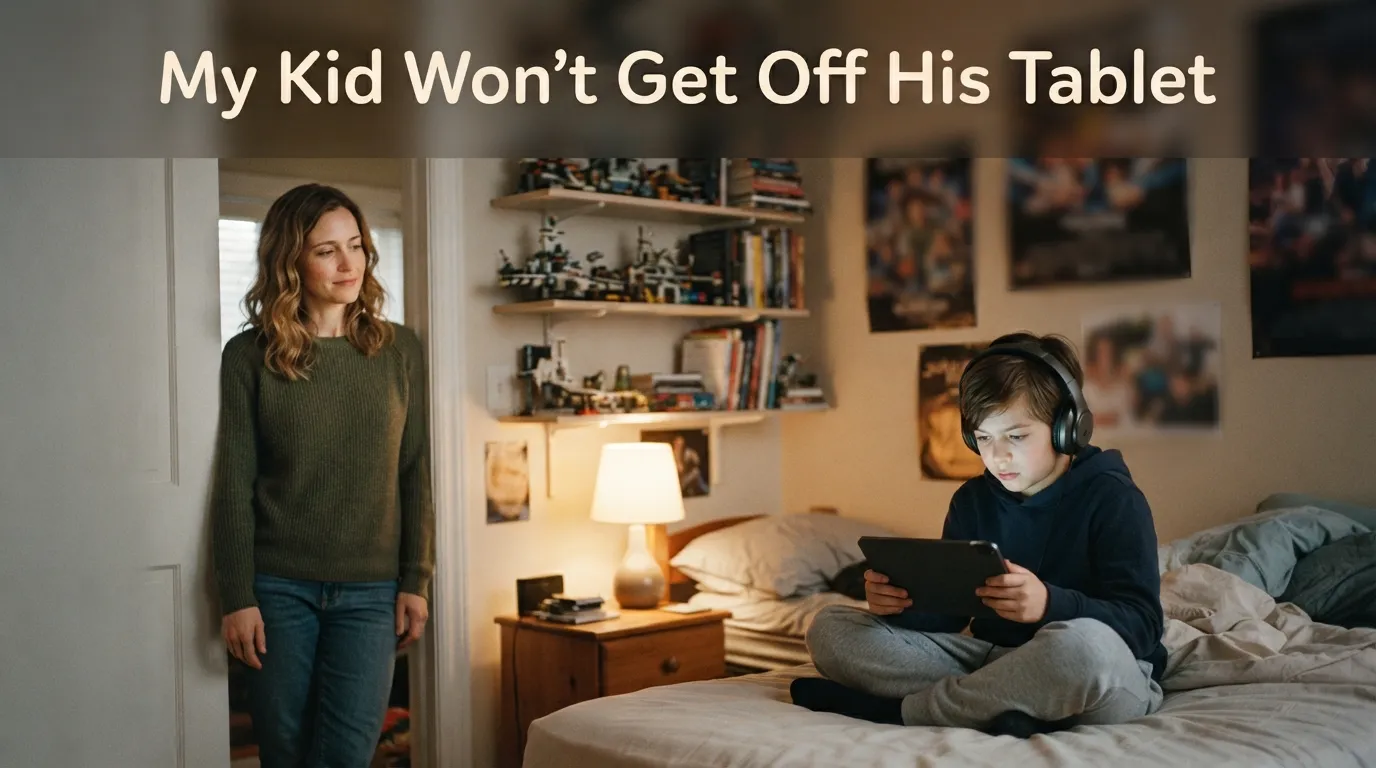
Last Tuesday I stood in my son’s doorway for four full minutes watching him not notice me. Headphones on, thumbs going, some Minecraft server with kids yelling through the mic. I said his name twice. Nothing. I finally just reached over and closed the laptop lid, and the sound that came out of him — genuine grief, like I’d told him the dog died — that’s when it hit me that this wasn’t a “just turn it off” problem anymore.
He’s ten. Old enough to build genuinely impressive redstone contraptions and negotiate like a union rep, young enough that when the screen goes dark, something in him seems to go dark too. If you’ve got a kid like this, you already know the specific flavor of exhausted I’m talking about. It’s not that he’s a bad kid. It’s that something got its hooks into him and I didn’t see it happen.
So Is This Actually “Addiction”?
Honestly? I go back and forth on the word. Most pediatricians and psychologists will tell you true addiction is a clinical thing, and slapping that label on a kid who loves Roblox a little too much isn’t quite accurate. Fine. I’ll grant that.
But call it what you want — habit, dependency, whatever sounds less alarming at a dinner party — the behavior is the same. My son isn’t choosing to play for six hours. Something is choosing for him, and he doesn’t have the brakes yet to override it. That’s the part that matters, not the terminology.
What I’ve noticed actually worth watching for: the meltdown when it ends isn’t proportional to what’s happening (nobody should cry like that over a paused game), sleep gets weird, he stops asking to do the stuff he used to love — bike, Legos, whatever — and there’s sneaking. The sneaking is the one that got me. Finding the tablet under a pillow at 10:40 pm changes something in how you see the situation.
Why Ten Specifically Feels Like the Worst Age for This
Nobody warns you about this. Six-year-olds you can just physically remove from a device and they cry for ten minutes and move on. Ten-year-olds remember. They argue. They know exactly which parent said yes last time.
And the games themselves aren’t the same games we grew up with. There’s a reason your kid never wants to stop right at a “good stopping point” — there isn’t one. Streaks that punish you for missing a day, matches that auto-queue the next round before you can think, notifications engineered by people whose entire job is figuring out how to make a ten-year-old feel like leaving is a mistake. That’s not paranoia. That’s the business model.
Meanwhile your kid is right in this weird pocket of wanting independence but not having the judgment to handle it yet. He wants to be trusted with his own screen time decisions. He is, not to put too fine a point on it, extremely bad at that.
Before You Change Any Rules, Have the Conversation First

I skipped this step the first time around and just started cracking down, and it went badly. Stricter rules with no explanation just reads as unfair to a ten-year-old, and unfair is the one thing they will fight you on forever.
What worked better, eventually, was asking him straight up, at a calm moment, not mid-argument: “What is it about stopping that’s so hard?” His answer surprised me. It wasn’t really about the game. It was that his friends were all still playing and he didn’t want to be the one who logged off and got left out of whatever happened next. That’s a completely different problem than “my kid loves screens too much,” and it needed a completely different fix.
Ask yours. You might be bracing for one answer and get a totally different one.
The Stuff That Actually Worked (Eventually, After a Lot That Didn’t)
Warnings before endings, not sudden cutoffs. I used to just say “time’s up” cold, and every single time it turned into a fight. Now it’s ten minutes, then five, then done — and I say it out loud, not just set a timer he can ignore. It’s not magic. He still grumbles. But it’s a grumble, not a meltdown.
Let him find his own stopping point when the game allows it. “What’s a good spot to save?” gets a completely different reaction than “turn it off now.” Some games genuinely punish you for quitting mid-match — respecting that isn’t caving, it’s just not being unreasonable.
Set the rule when nobody’s mad. Screens off at 6 on school nights got decided on a random Sunday afternoon, not screamed across the living room during round four of an argument. Rules made in advance are rules you can actually enforce without it turning into a negotiation every single time.

Devices sleep in the kitchen, all of them, mine included. This one fixed the midnight sneaking overnight, no pun intended. There’s no willpower contest if the tablet physically isn’t in the bedroom.
Match hypocrisy is instantly clocked by a ten-year-old. I cannot ask him to put his phone down at dinner while mine sits face-up next to my plate. He notices. He says something. He’s right to.
Have something ready for the boredom that follows. Pulling the screen and offering nothing back just makes for a bored, furious kid stalking around the house. A stack of library books, art stuff within reach, a standing “go find someone to ride bikes with” — it doesn’t need to be elaborate, it just needs to exist before the screen goes off, not after.
Tell him how the app is built to hook him. This one actually landed better than I expected. Explaining that the streak feature exists specifically so he feels bad about breaking it — that’s not a lecture, that’s letting him in on something most adults don’t even think about. Kids who understand they’re being nudged make different calls than kids who just feel a pull they can’t name.
When It’s Bigger Than a House Rule Can Fix
If the fights aren’t easing up after a few weeks of actually sticking to a plan, or if sleep, grades, or friendships are visibly taking a hit, that’s worth a conversation with your pediatrician. Sometimes the screen isn’t the root problem — it’s the place a kid goes to escape something else, anxiety or trouble focusing or just plain loneliness. Worth ruling that out rather than assuming it’s purely a willpower issue.
Where We Landed
We didn’t fix this with a stricter rule. We fixed it, mostly, with Sunday bike rides that became the one thing that wasn’t negotiable, screens or no screens. He still argues sometimes. He still loves Minecraft more than is probably healthy. But he’s got a thing now that pulls him away from the screen without me having to be the bad guy every single time, and that’s done more than any rule I ever wrote on a whiteboard.
There’s no clean ending to this one. Some weeks are better than others. But consistency plus actually knowing what’s underneath the behavior beats a strict rule every time, even on the weeks it doesn’t feel like it’s working.