
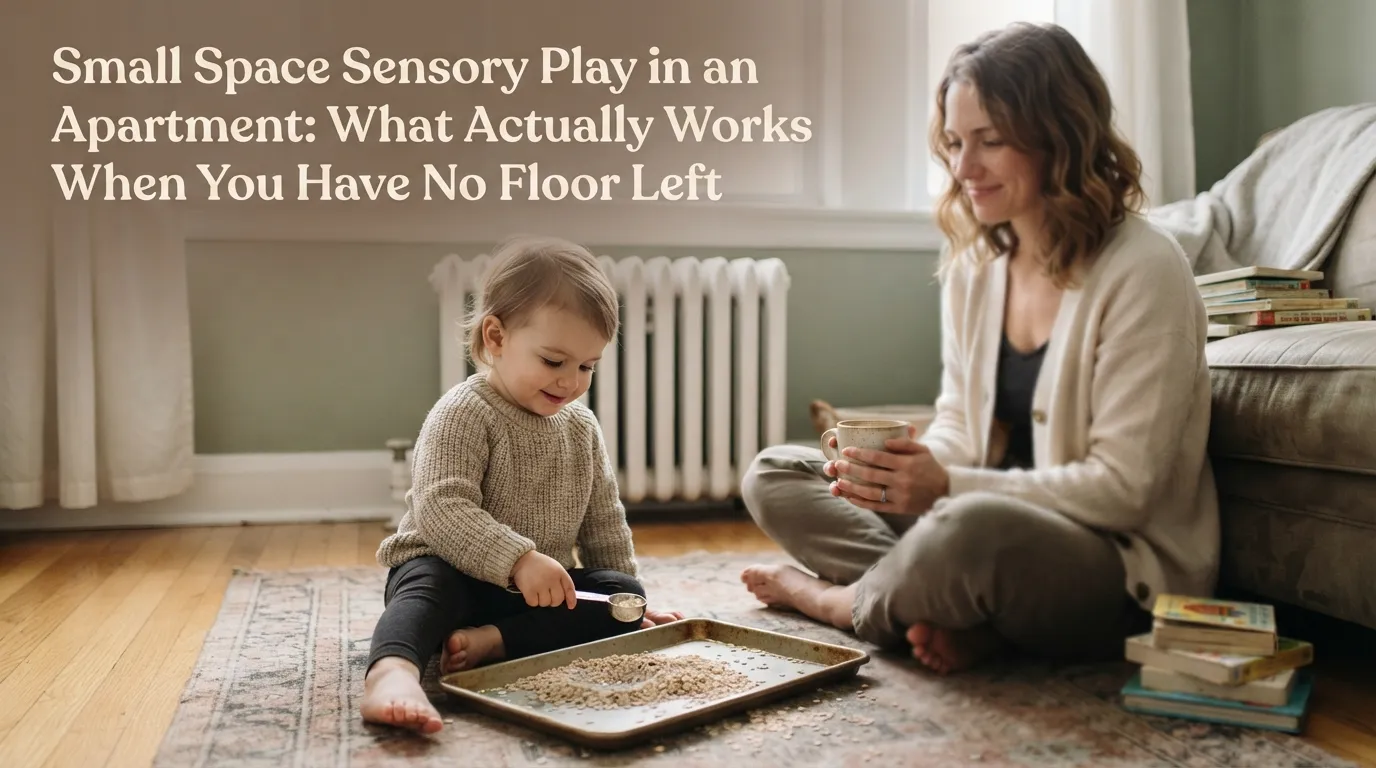
It was a Tuesday in February when my youngest tipped a whole container of dry rice across the living room, gazed at it for a second, and announced, “Snow.” I stood there holding a dish towel, doing the math on how long it would take to vacuum. Then I sat down on the floor. Both things happened. The vacuuming came second.
We live in an apartment. The downstairs neighbors can hear a dropped spoon, our “playroom” is a corner by the radiator, and I’ve never once looked at a sensory table online without laughing. Still, my kids have done more squishing, pouring, and digging in this small place than I ever expected. Here’s how.
Get a Baking Sheet With Edges
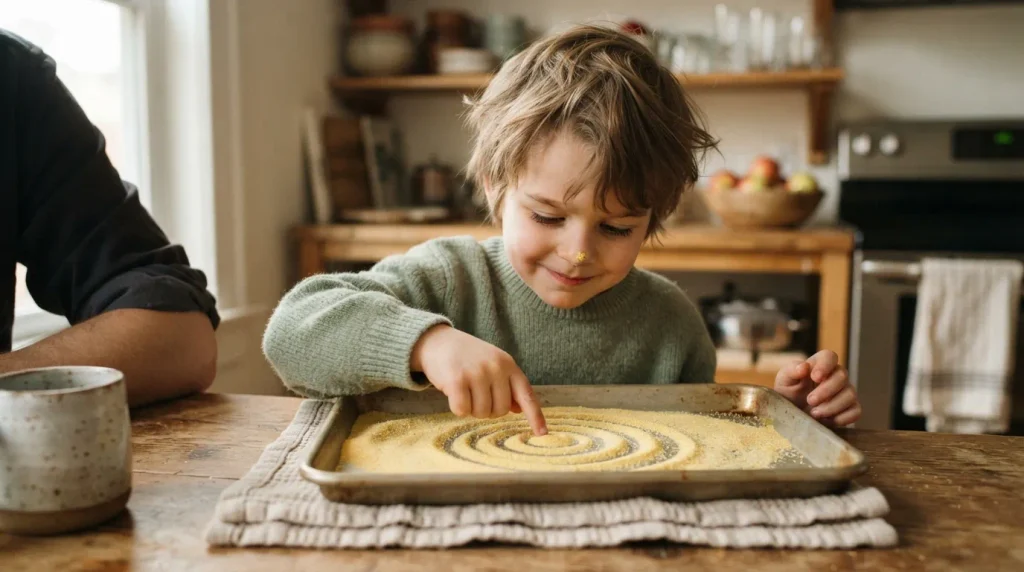
I’ll say it plainly: a rimmed baking sheet beats every sensory product I’ve bought. It cost about what I’d spend on a latte. The lip catches most of the spill, and when playtime ends it slides under the couch like it was never there.
A handful of oats and two measuring spoons will hold a toddler for twenty minutes, which in toddler time is basically a season. Older kids, around four to six, like kinetic sand or a thin layer of cornmeal they can draw in with one finger. Put a towel under the tray if you have hardwood. I found out the hard way that loose grains on a smooth floor are an ice rink, and I found out in socks.
The Bathtub Is Free Real Estate
It took me an embarrassingly long time to realize the bathtub is just a waterproof room. Nothing in there needs protecting, and the cleanup is a rinse.
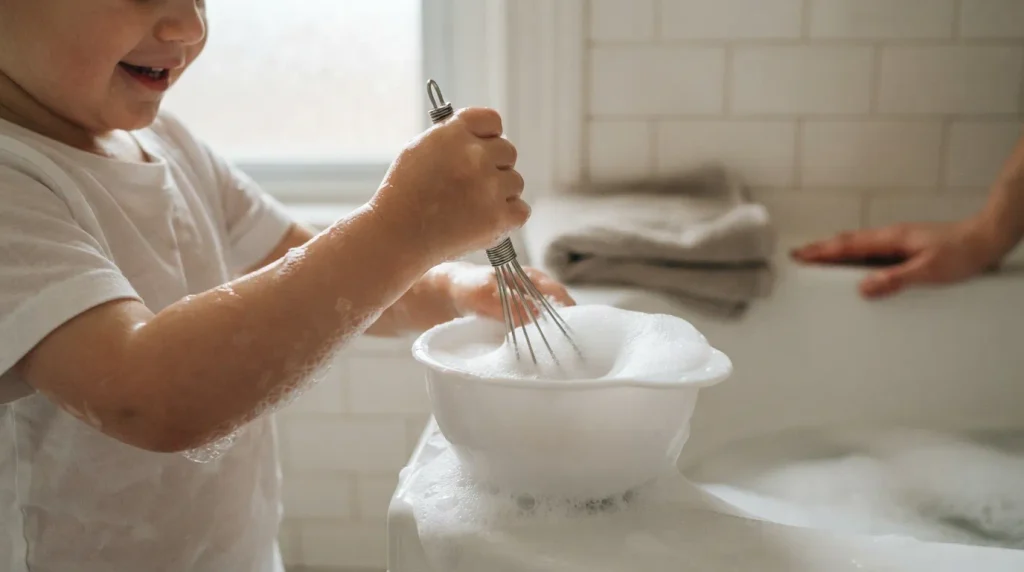
Our hit is foam. Squirt some baby shampoo into a bowl with a little water and hand over a whisk. Whisking is the whole event; the foam is almost a bonus. Cooked, cooled spaghetti with a few drops of food coloring is repulsive in the best way, and a bag of frozen peas with a ladle and some plastic cups bought me a hot cup of coffee once, which I still think about. For kids under three, stay close with anything involving water. You’d be hovering anyway.
Bins, but Small Ones
Forget the giant storage tote. A shallow under-bed box or a big mixing bowl works fine, as long as you can shove it in a closet in under a minute.
Dry rice or lentils with a few scoops is the workhorse. Pour, scoop, dump, repeat, until dinner if you let them. Dried pasta shapes with a handful of plastic animals turns into a zoo, and the pasta rattles in a way kids find deeply satisfying (so, daytime only, for your neighbors). Cotton balls and kitchen tongs are the quietest option I know, and all that pinching builds the hand strength they’ll need for holding a pencil later.
Water beads are the one I’d hold back on. They’re fun, but they’re a genuine hazard if a small kid or a pet swallows one, and they escape across a room faster than you’d believe. I wait until my kids are well past the mouth-everything stage, and I count them out and back in.
Stop Buying Things
This is my firm opinion: a small home can’t handle a pile of sensory kits, and kids don’t need them. You’ll spend money, lose a closet, and your child will still go back to the box the kit came in.
Keep two or three bins and change what’s inside every week or two. The same rice is a construction site on Monday and a beach by the following week. A few toy trucks, a pair of cookie cutters, or a pocketful of acorns from the park can make an old bin feel brand new. When I tossed acorns into our oat tray, you’d have thought I’d mailed them a pirate chest.
For the Days You Have Nothing Left
Some afternoons you simply cannot face grains on the floor, and that’s allowed. Fill a zip-top bag with hair gel and a few sequins, seal it, and tape it flat to a window. Little fingers can squish and swirl it, and nothing escapes. A basket of fabric scraps (something silky, something fuzzy, a square of corduroy) gives a toddler plenty to feel and argue over. Homemade playdough takes about ten minutes on the stove and lasts for weeks in a container. And on a warm day, a baking dish of cold water with a few ice cubes can absorb a kid for far longer than it has any right to.
Say the Rules Before the Bin Comes Out
Most of our mess came from me never saying what I wanted. Now I say it up front, short and in a normal voice: “The rice stays on the tray. If it lands on the floor, we scoop it back.” That’s the whole speech.
When something escapes anyway, I keep it light. “Oh, that one got away. Let’s bring it home.” Kids respond to calm far better than to a sharp “No!” And end with a cue. A two-minute timer or “the bin needs to go to bed now” gives them a way to stop that doesn’t feel like being punished.
Where and When
Spread an old flat sheet or a cheap shower curtain under the activity and you’ve got a splash zone you can shake out over the sink or off the balcony. Play near the kitchen if water’s involved. Keep it away from the couch, for reasons I’ve already confessed.
Timing matters more than I expected. Naptime sounds tempting, but sensory play usually needs a few minutes of your attention to get started, and it won’t give you the quiet you were hoping for. We do late morning, after a snack and before lunch. Everyone’s fed and curious.
And Sometimes It’s a Disaster
Some days the oats end up in the dog’s water bowl, one kid sobs over the cornmeal, and the whole production lasts four minutes. I used to take that personally. I don’t anymore. A short, wobbly session still counts for something.
What my kids need is a safe spot to dig and pour and squish, plus a parent sitting nearby who isn’t hovering over the vacuum. A tray, a bowl of oats, and ten minutes on the floor will do it, even in four hundred square feet.
Frequently Asked Questions
When can my baby start sensory play?
Almost right away, with simple things: a soft cloth, a crinkly paper, a bowl of cool water with you watching closely. Tray and bin play usually clicks around twelve months. Check every material for choking risks first, since little ones taste everything.
How do I stop my toddler from eating the materials?
You mostly won’t, so plan for it. Use taste-safe stuff like cooked pasta, oats, or frozen peas, and sit within reach. When a handful heads for a mouth, say “That’s for hands, not mouths,” and redirect. If it keeps happening, put the bin away and try again in a few weeks.
How do I keep the noise down for the neighbors?
Play on a rug or towel and choose quiet materials like fabric, foam, and playdough. Save the rattly pasta bins for daytime. Pouring oats is much quieter than dropping blocks.
How long should a session last?
Whatever your child says. For toddlers it’s often ten to twenty minutes, and sometimes five. When they start dumping things on purpose or wandering off, you’re done.
My child hates getting messy. Should I push it?
No. Start with dry, contained options like cotton balls, fabric scraps, or the gel bag on the window, and let them watch you first. Forcing a hand into something sticky usually backfires. Plenty of wary kids come around on their own.
What about the mess that escapes?
A handheld vacuum or a damp towel handles most of it, and a small broom is great for rice and oats. A few grains will hide for months. That’s the deal.