
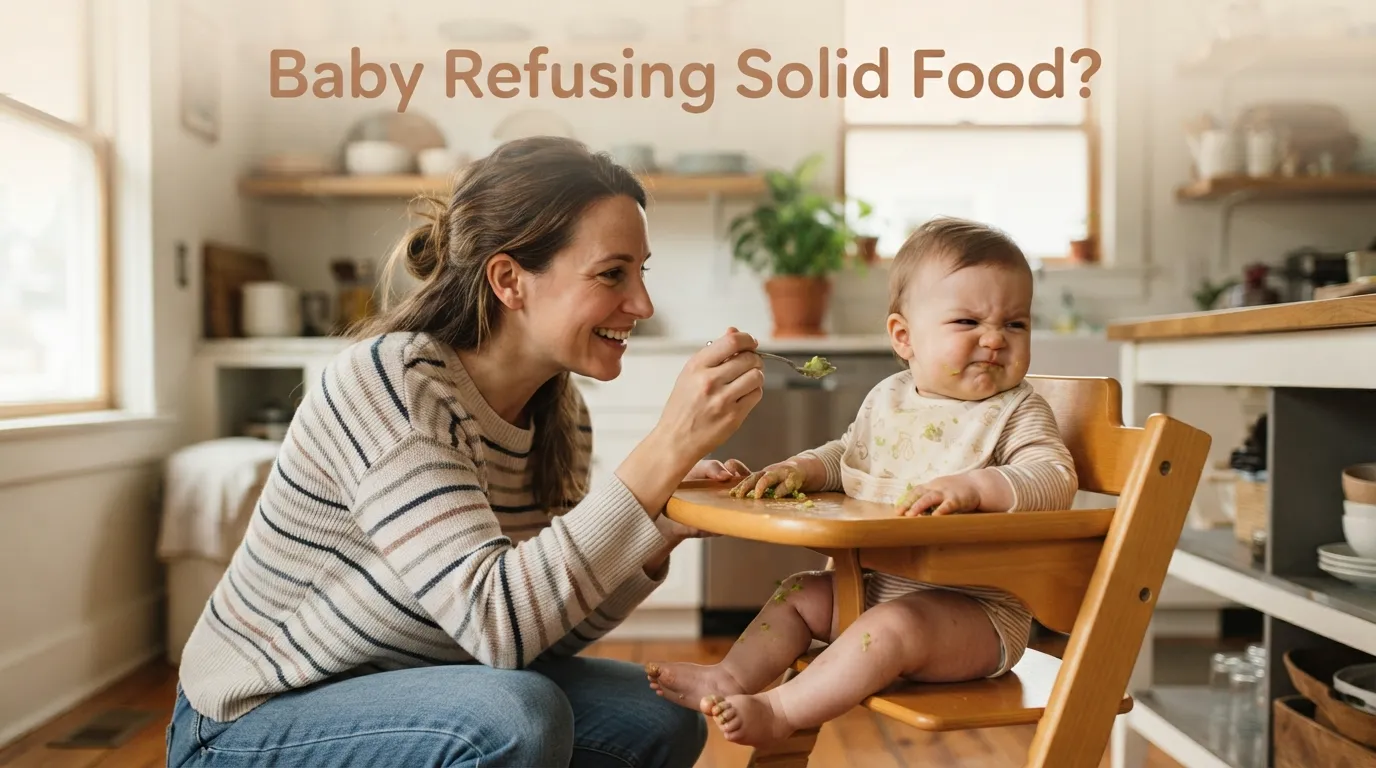
My youngest turned six months old on a Tuesday, and by Thursday I had a high chair, a bib shaped like a strawberry, and a container of mashed banana I’d made with entirely too much ceremony. She looked at the spoon, looked at me, and turned her head so fast I nearly got banana on my glasses instead of her face. Lips sealed. Eyebrows up near her hairline. It was honestly a little insulting.
My older one, at that same age, ate like he was training for something. Sweet potato, avocado, oatmeal — didn’t matter, it all went in, most of it staying there. So when the second one clamped her mouth shut day after day, I did what every tired, slightly paranoid parent does at 9pm: I googled it in a panic while she slept.
Here’s what I wish someone had told me sooner. Food refusal at this stage is almost never about the food. It’s rarely a sign that something’s wrong. And it’s maddeningly common — common enough that pediatricians barely blink when you bring it up.
Why Babies Refuse Solids (It’s Usually Not What You Think)
The Food Itself Is Genuinely Bizarre to Them
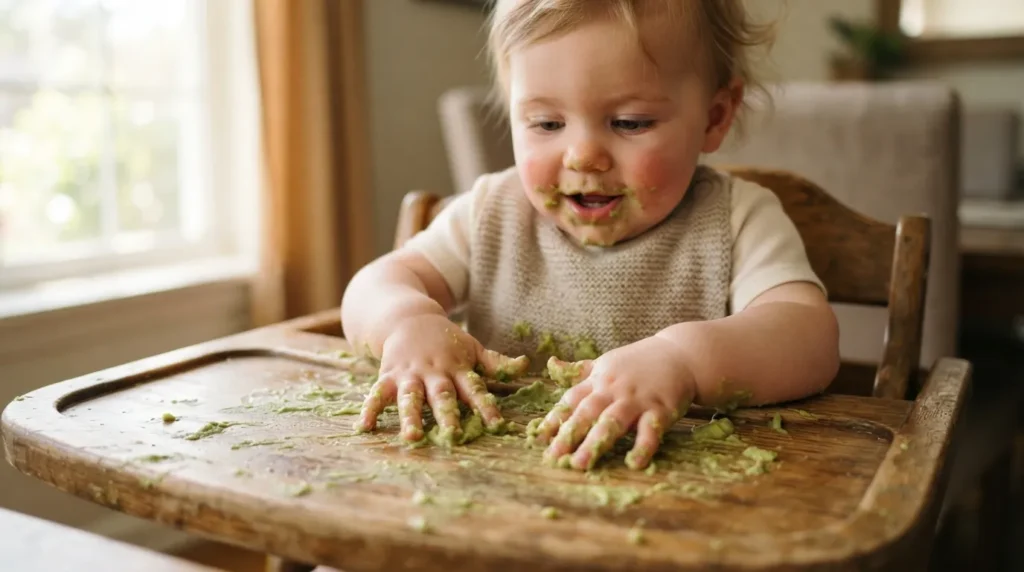
Try to remember — you can’t, but try — that your baby has spent their entire life on liquid. Warm, familiar, delivered in one of two ways. And now there’s a cold metal spoon showing up with some beige paste on it that smells like nothing they recognize. Some babies shrug and go with it. Mine needed about three weeks of just poking at food with her finger before a single bite went near her mouth.
That’s not stalling. That’s how a lot of babies actually learn to eat — through their hands first, their mouths second.
Bad Timing, Plain and Simple
I made this mistake constantly with my son: trying to feed him right after he woke up from a nap, still glassy-eyed, wanting to be held and not strapped into anything. No baby performs well hungry-but-also-half-asleep. If mealtimes keep flopping, check the clock before you check anything else. Thirty to sixty minutes after a milk feeding tends to be a sweeter spot — alert, not starving, not overstuffed.
Teething, Which Nobody Warns You Ruins Appetite Too
Sore gums make chewing hurt, and sometimes even the pressure of a spoon against the gum line is enough to trigger a full-body no. If the refusal shows up with drooling, chewing on fists, or a crankiness that came out of nowhere, I’d bet on teething before anything else.
Texture Preferences That Are Real, Not Pickiness
This one surprised me. Some babies love purees and gag the second something lumpy hits their tongue. Others find purees genuinely gross — the sliminess, the sameness — and do so much better with something they can gnaw on themselves, like a soft-cooked carrot stick or a spear of ripe avocado. This isn’t a character flaw at seven months old. It’s a sensory thing, and it’s worth paying attention to instead of fighting.
Too Much Tension at the Table
Babies read a room better than we give them credit for. If you’re leaning in, narrating every bite, tensing up when the spoon comes back untouched — they feel that, and it tends to make things worse, not better. I’ve watched this happen with more than one friend’s kid. The more anxious the parent gets, the more the baby locks down. It’s almost comically predictable once you notice it.
A Cold, Reflux, or Just an Off Day
Sometimes there’s no deeper story. A stuffy nose makes eating and breathing compete with each other. Reflux can make certain positions after a meal genuinely unpleasant. And sometimes, like the rest of us, a baby just has a day where nothing sounds good.
What Actually Moves the Needle
Skip the pressure, keep the offer. Put the food down, let them do what they want with it, and take it away without a big reaction if it goes untouched. No cheering when they eat, no disappointed sigh when they don’t — just neutral, boring consistency.
Let mealtime get messy, on purpose. A baby smearing squash across the tray isn’t wasting food. They’re doing the actual work of figuring out what it is before they decide whether it goes in their mouth.
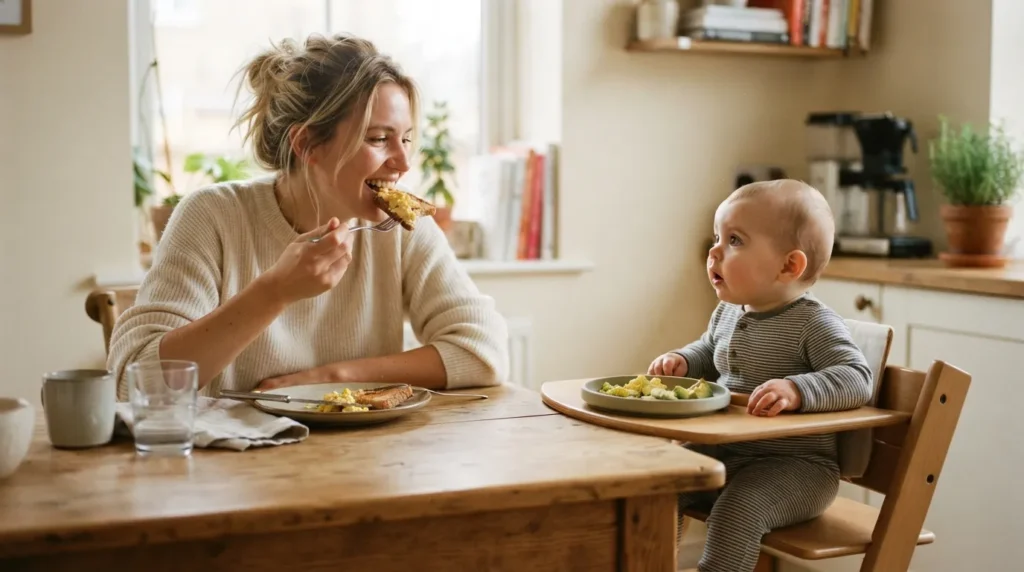
Eat in front of them. This one worked almost embarrassingly well for us — my daughter started eating scrambled eggs within a few days of watching me eat them across the table from her, morning after morning. Babies copy. Use that.
If texture seems like the sticking point, switch it up before assuming refusal. Purees not landing? Try something soft they can hold — a strip of toast, a well-cooked pasta noodle. Gagging on lumps? Step back toward smooth for a while and reintroduce texture slowly, not all at once.
Keep the portions small and your expectations smaller. A tablespoon is a completely normal amount of food for a baby this age to actually eat. This stage is about exposure, not clearing a plate — and exposure sometimes takes ten or fifteen tries before something clicks.
Don’t retire a food after one rejection. If broccoli gets the disgusted face on Monday, set it aside and try something else, then bring it back later in the week. Repetition, spread out over time, tends to matter more than any single dinner.
When It’s Worth an Actual Phone Call
Most of this resolves on its own, on its own timeline, with zero intervention needed beyond patience. But a few things are worth flagging to your pediatrician rather than waiting out quietly: refusal paired with poor weight gain, frequent gagging or vomiting across most textures rather than occasionally, visible pain or difficulty swallowing, total and ongoing disinterest in food well past the early experimenting phase, or signs of dehydration like fewer wet diapers than usual.
If any of that sounds familiar, don’t sit on it. Pediatricians see feeding struggles all the time and can rule out things like oral motor issues or reflux that go beyond ordinary early pickiness.
The Part I’d Tell You Over Coffee
The banana-refusing baby I mentioned at the start now eats off your plate before you’ve noticed it’s gone. Whatever she was working through at six months, she worked through it — not on any schedule the books promised, just eventually, the way most of these things resolve.
Give it more time than feels comfortable. Keep the pressure low. Your baby is learning something genuinely new, and that takes as long as it takes.