
My son once cried — actual tears — because I turned off the same 90-second clip of a garbage truck for the eleventh time in a row. It was 5:10 p.m. The chicken was still frozen. I remember standing at the counter thinking, I have a graduate degree and I cannot get through the next forty minutes without a screen. That was three years ago, and honestly, some days still feel exactly like that.
So I’m not writing this from some smug, screen-free high ground. I’m writing it because I got tired of the guilt spiral and started keeping a running list of things that actually work — not “engage your child’s imagination” fluff, but real, boring, five-minute-setup stuff that buys me time to cook or breathe or just sit on the floor and not be climbed on for a second. Twenty-five of them, below. Steal whatever’s useful and ignore the rest.
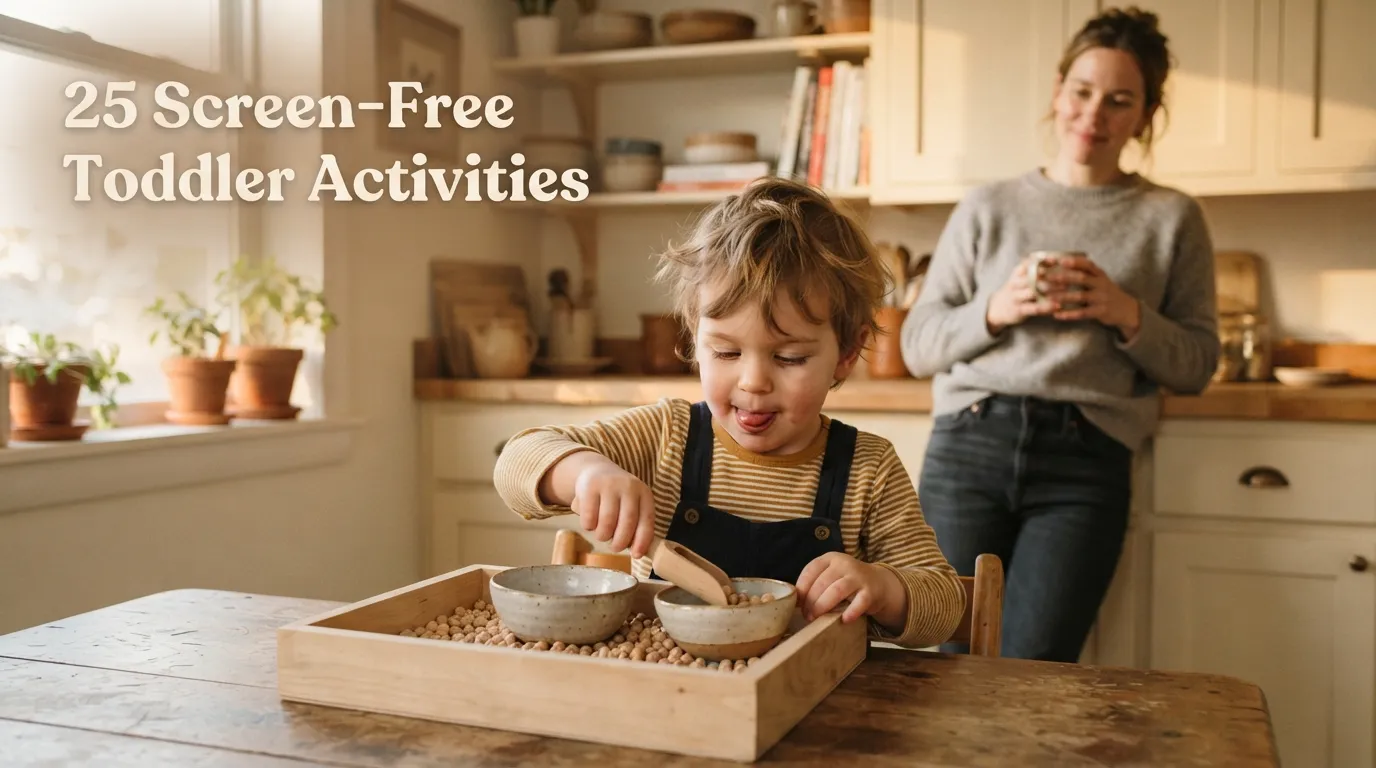
Sensory Play (or: Why Dried Beans Are Secretly the Best Toy You Own)
1. Sink water play. Chair pulled up to the kitchen sink, sleeves rolled, a couple of plastic cups. Towel on the floor is non-negotiable — learned that one the hard way. This buys a solid fifteen minutes, sometimes twenty if I add a whisk.
2. A dried-bean bin. Chickpeas, rice, whatever’s cheap and in the pantry, poured into a shallow bin with a scoop. My daughter spent an entire summer transferring chickpeas from one bowl to another for reasons I never understood and never questioned.
3. Playdough with actual kitchen tools. Skip the store kit. A dull butter knife, a rolling pin, and whatever cookie cutters are already in your drawer work just as well, and there’s one less plastic thing to store.
4. Shaving cream on the table. Spray, smear, done. Sounds like a disaster, wipes up faster than most “mess-free” crafts I’ve paid actual money for.
5. The feely bag. A pillowcase with a sponge, a spoon, a sock, whatever’s within reach, and your toddler guesses by touch alone. Takes ten seconds to set up and somehow works every single time.
Fine Motor Stuff That Doesn’t Look Like Learning
6. Tong-and-tin sorting. Kitchen tongs, a muffin tin, a pile of pom-poms. Looks like nothing. Is actually real hand-strength work, which is why it tires them out more than you’d expect.
7. Sticker peeling. A blank page and a cheap sticker sheet. Peeling is genuinely difficult for tiny fingers, and that difficulty is exactly what keeps them at it.
8. Pipe cleaners through an old colander. I don’t know why this one lands so consistently, but it does. Every kid I’ve handed it to has gone quiet and focused within about thirty seconds.
9. Threading penne onto a shoelace. Great for slightly older toddlers with steadier hands. Skip it entirely if yours still mouths everything — not worth the risk.
10. Just tearing paper. No project, no purpose, just tearing strips into a bowl. Sounds like nothing. Is somehow deeply satisfying to a two-year-old.
Getting the Wiggles Out
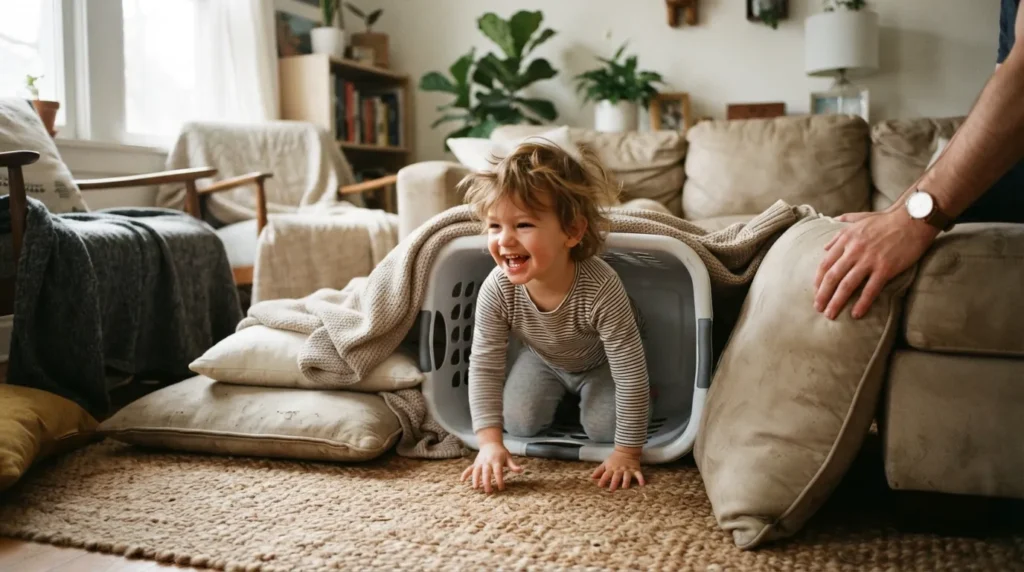
11. Couch-cushion obstacle course. Cushions on the floor, a laundry basket to crawl through, painter’s tape for a “tightrope.” Free, and it burns real energy fast.
12. Freeze dance. Music on, dance, pause, freeze. My son could do this on loop for what felt like an unreasonable amount of time — and honestly, once I stopped resisting and joined in, so could I.
13. Balloon volleyball. One balloon, some open floor. That’s the whole activity. Perfect for a rainy day when everyone’s a little stir-crazy and snapping at each other.
14. Animal walk relay. Crab walk there, frog hop back, duck waddle to the kitchen. Say the animal, they do the move. Good one before nap — tires them out without winding them up.
15. Blanket fort, flashlight inside. Sheet over two chairs, flashlight tossed in, instant campsite. This has bought me more quiet evenings than almost anything else on this list.
Pretend Play, Zero Budget Required
16. A cardboard box, nothing else. Markers optional. I stopped breaking down big delivery boxes for recycling the second I realized what one turns into for a toddler.
17. Pretend cooking with real pots. Old pots, plastic spoons, empty clean containers. Let them “cook” while you actually cook. Ask what’s on the menu — they’ll answer with total seriousness.
18. Dress-up from your closet. Skip the costume bin. An old scarf, your shoes two sizes too big, a hat — none of it needs to be “real” for a three-year-old to commit fully.
19. Doctor kit on stuffed animals. Toy stethoscope, some band-aids, a row of patients. Bonus: it genuinely helps before actual pediatrician visits, if you want to be a little strategic about it.
20. Sock puppet show from behind the couch. You don’t need a script. A squeaky “hello!” from behind a couch cushion gets real laughter, every time, no exceptions.
Quiet Solo Play (For When You Need Actual Silence)
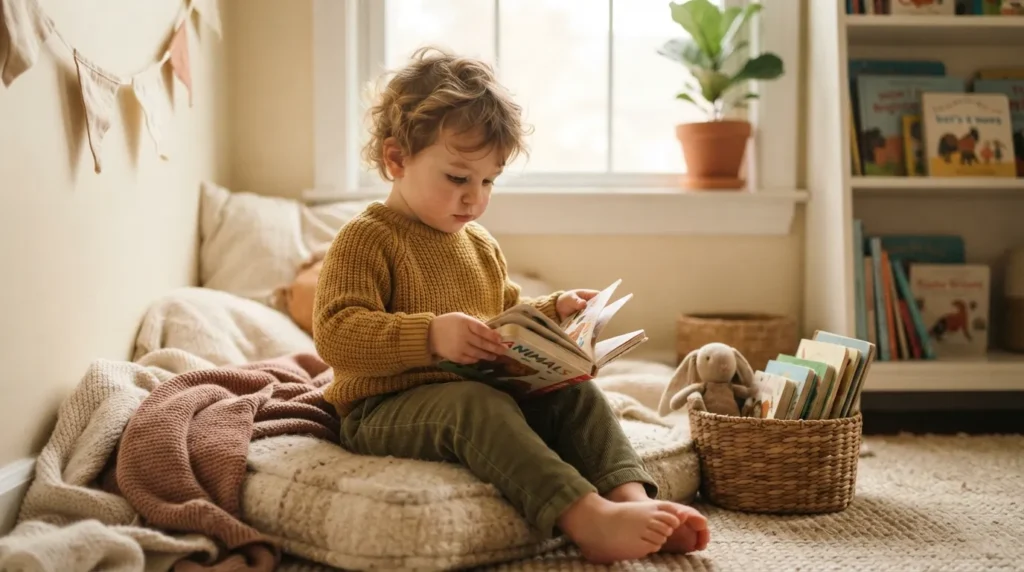
21. A basket of board books in a cozy corner. My youngest used to narrate her own version of “Goodnight Moon” out loud, word for word wrong, completely absorbed. Set the basket by a pillow and let them go.
22. Magnetic tiles or open-ended blocks. These hold attention way longer than anything with batteries. If you only buy one toy off this whole list, buy this one.
23. Big crayons, taped-down paper. Chunky crayons sized for small hands, paper taped to the table if yours is the type to color past the edges. Mine was.
24. A rotating busy bag. Three or four toys kept out of daily rotation, swapped weekly. Nothing new gets bought — the “new” toy is just an old one they haven’t seen in a month.
25. A basket of stuff from outside. Pinecones, leaves, smooth rocks, whatever you find on a walk. Something about sorting natural objects at the table calms toddlers down in a way I can’t fully explain but have watched happen too many times to doubt.
The Guilt Part, Actually Addressed
Here’s what I want you to actually take from this: screen-free play isn’t about becoming the parent who never turns on the TV. It’s about having a few low-effort options ready so the screen isn’t the only tool in the drawer. Some days you’ll use half this list. Other days you’ll hand over the tablet and move on with your life, and that’s a completely reasonable choice, not a failure.
What matters more than any single activity is having a mix — quiet and active, messy and tidy, solo and together — because toddlers cycle through moods faster than we can keep up with. The couch-fort well runs dry by the third round of the week. Having something else ready means you’re not standing in the kitchen improvising at 4:45.
What Actually Makes This Sustainable
A few things I learned the slow way. Rotate what’s out instead of leaving everything accessible all the time — toddlers get bored of anything that’s always in reach, same as we’d get bored of the same lunch every day. Keep supplies in one small bin so setup takes under a minute. If it takes longer, you won’t do it on the exhausted days, and let’s be honest, most days are the exhausted days.
Lower the bar, too. Ten focused minutes is a win. You do not need an hour of silence to call the afternoon a success.
A muffin tin, a bag of pom-poms, and fifteen quiet minutes are sometimes genuinely enough. Some evenings that’s the whole win, and I’ve stopped apologizing for it.