
It’s 4:15 on a Tuesday. My son has asked for “the egg video” four times in the last ten minutes, and I’ve said no four times, and somewhere around the fifth ask my hand actually moved toward my back pocket before my brain caught up with it. That’s the moment that got me — not some big parenting epiphany, just catching my own hand reaching for the easy way out.
I have two kids, three and six, and last June I told myself: this is the summer we do it differently. No dramatic announcement, no chart on the fridge. Just — every time I felt that phone-reach instinct, I’d do literally anything else first. Water in a bowl. A walk to the mailbox. Yelling “who can find the mailbox” and racing him there. What follows is what actually worked, what flopped (there was a homemade slime disaster involving my good mixing bowl that I still think about), and the exact phrases I used when things went sideways, because “just say no” is advice that sounds great until you’re the one standing in the kitchen at 4:15 hearing it in your own voice for the ninth time.
Why Bother With a No-Phone Summer Anyway
Here’s the honest version, not the Instagram version: toddlers don’t actually need a screen-free summer to turn out fine. Plenty of kids watch some TV and grow up completely normal. I’m not writing this because screens are poison.
I’m writing it because my son gets noticeably more bored, not less, the more screen time he has. Give him twenty minutes of a show and he’s antsy and short-tempered for the next hour. Give him twenty minutes digging in the dirt with a spoon and he’s fine. Pediatricians generally point toward limited, purposeful screen time for preschoolers — not zero, just limited — and mostly that lines up with what I’ve watched happen in my own kitchen.
So a no-phone summer, for us, wasn’t a moral stance. It was a bet that my kid would be a nicer person to live with by August. Mostly, it paid off.
Get the Boring Stuff Ready First
Nobody wants to hear this part, but it’s the part that actually matters. If you wait until the meltdown to think of something to do, you will lose, every time, to a glowing rectangle that requires zero effort from either of you.
Before the summer started, I did three things:
I cleared a low kitchen shelf and put a rotating bin of “yes, you can make a mess” stuff on it — dry pasta, plastic cups, a turkey baster from the dollar store that got more use than any toy we own. I swap it out every couple weeks so it stays interesting, which honestly takes me about four minutes.
I stopped trying to schedule the day hour by hour and just built a rough shape: outside first thing, quiet time after lunch, more outside once it cools off. Toddlers don’t care about clocks. They care about knowing roughly what’s coming next.
And I braced myself for the first few days being rough, because they were. If your kid is used to a tablet, taking it away cold isn’t peaceful — it’s closer to a caffeine headache. Ours had two genuinely bad afternoons before it got easier. That’s normal. It doesn’t mean you’re doing it wrong.
Morning: When You Actually Have a Shot at Focus
Mornings are the good hours. Patience is at its peak, meltdowns are rare, and this is when I’d try anything that needed a little concentration.
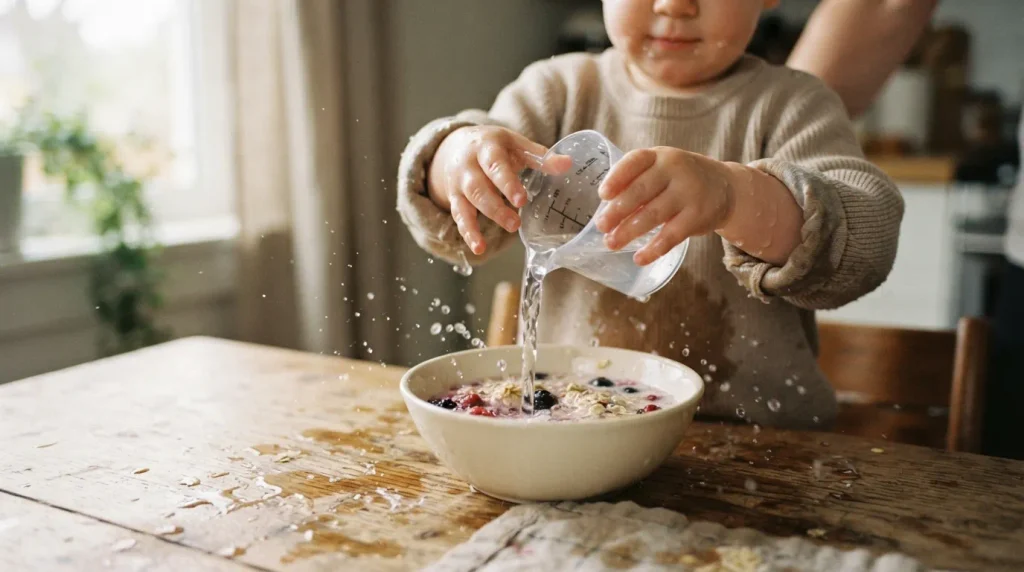
Water play is the workhorse of our house. A cereal bowl, some water, measuring cups from the back of a drawer we never use. I’ve gotten twenty real minutes out of this more times than I can count, and one memorable Tuesday I got almost forty, though that one ended with a very wet kitchen floor.
Sensory bins are basically the same idea, dry version. Dry rice, a few scoops, some small plastic dinosaurs buried in it. Skip this one if your toddler still puts everything in their mouth — mine did until about two and a half, and I learned that the hard way with a mouthful of couscous.
Chalk and bubbles outside, before it gets hot. If your kid just stares blankly at the chalk (mine does this constantly), give them a job: “Draw a road for your dump truck.” A little direction goes a long way at this age.
The Afternoon Slump Is the Real Battle
Let’s not pretend the 2 to 4 p.m. window is anything but brutal. Energy’s low, patience is gone, and this is exactly when I used to fold and hand over the phone.
Quiet time with books helped more than I expected. Not a full story — just five minutes on a mat with board books, flipping pages alone. We built that up slowly over a couple weeks, and by July he’d do it for twenty minutes without me in the room.
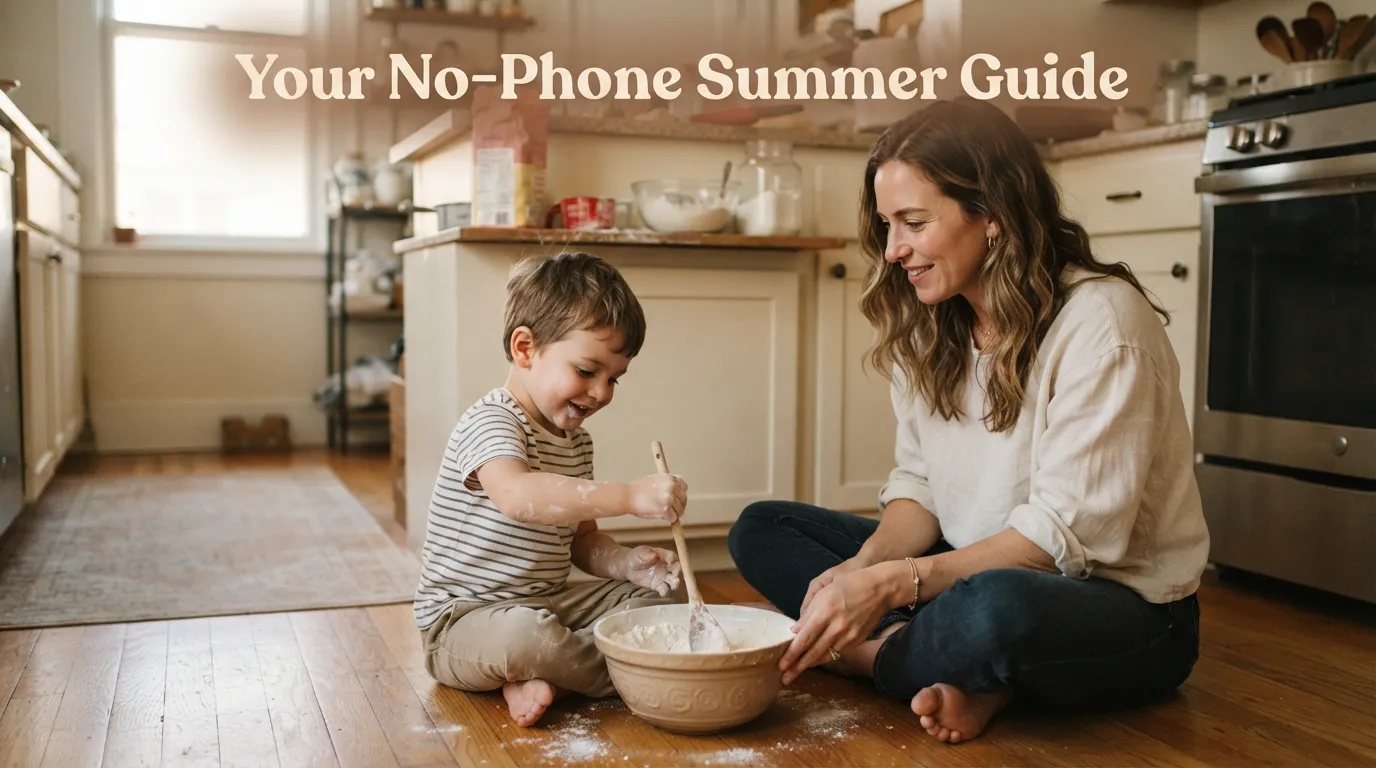
Fake baking bought me real kitchen time. A bowl, a spoon, some flour he could “mix.” He genuinely believes he’s helping. I genuinely get five minutes to actually cook dinner.
And then there’s the cardboard box, which I say only half-jokingly outperforms every toy we own. One box has been a car, a submarine, and — for one long afternoon in July — a “time-out box” for his stuffed dog, who apparently threw sand.
When he asked for the phone during this stretch, I stopped just saying no and started naming what was actually happening: “You’re bored right now. That’s a real feeling. Let’s find something else.” It doesn’t work every time. But it teaches something a flat “no” doesn’t — that boredom is a thing you get through, not a problem a screen has to solve.
Hot Days Need Water, Not Excuses
If it’s 95 degrees out, nobody’s winning an argument about outdoor chalk. Lean into the heat instead of fighting it.
The sprinkler or a $12 kiddie pool resets a cranky toddler faster than anything else we’ve tried — ten minutes, tops, and the whole mood of the afternoon changes. A “nature basket” for collecting rocks and leaves on a shaded walk turns a boring errand into an actual activity. And frozen toy excavation — small toys frozen in a container of water, handed over with a cup of warm water and a spoon — has bought me a solid twenty minutes of quiet concentration on more than one 90-degree day.
For the Days You’re Stuck Inside
Some days it’s raining, or it’s too hot even for the sprinkler, or you just don’t have it in you to go outside. You need a couple things in your back pocket for these.
An indoor obstacle course made of couch cushions and painter’s tape on the floor works better than it has any right to. A “washing station” — warm soapy water, a towel, some plastic animals — will get you fifteen straight minutes of a toddler scrubbing the same rubber duck like it’s a job. And putting on music and just dancing sounds too simple to actually help, but it’s saved more than one afternoon that was five minutes from falling apart.
When They Melt Down Anyway — Because They Will
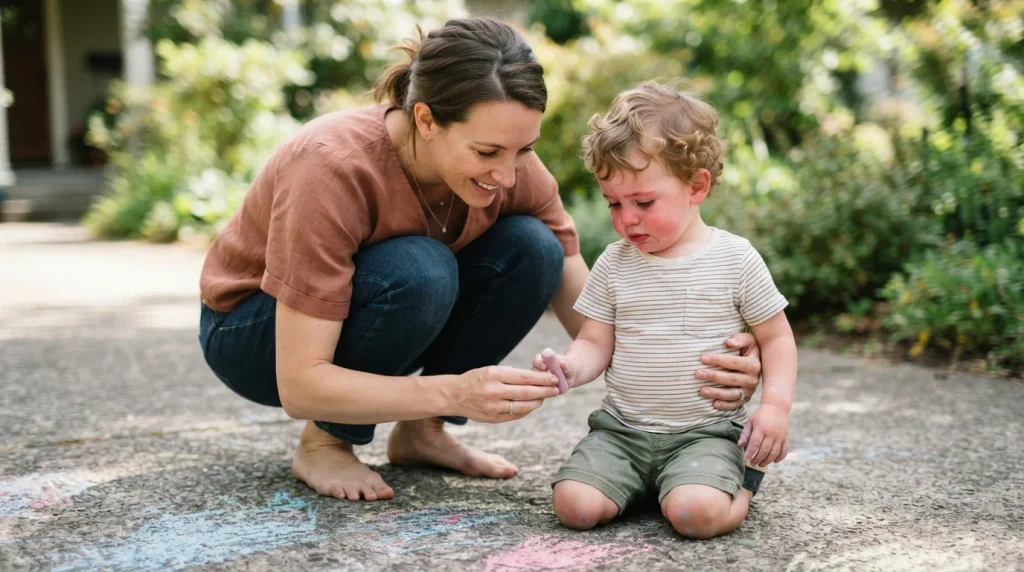
This will happen. Probably more than once a week, if I’m honest about ours. Mid-tantrum is not the moment for a long explanation — toddlers can’t process reasoning when they’re already past the point of no return.
Keep it short. “No phone right now. We’re going outside.” Then move — pick up a toy, walk toward the door, start doing the activity yourself without waiting for buy-in. More often than not, he follows once he sees something more interesting already happening without him.
And some days I caved. More than I’d like to admit, especially on the days I had a work call and a toddler with a fever and nothing left in the tank. That’s fine. This isn’t a streak you’re trying to protect. It’s a general direction, not a rule with a scoreboard.
How It Actually Went
By the end of August, it wasn’t some transformation story. There were still car rides where a show saved my sanity and I have zero regrets about it. But my son got visibly better at entertaining himself — I’d catch him narrating a whole story to his stuffed animals in the backyard, completely unprompted, and think, huh, that’s new.
I got better too, mostly at sitting on the kitchen floor instead of standing over him checking my phone while he played. That’s the part I didn’t expect to change. You don’t need a perfect summer or a spotless streak. You need a few decent activities within arm’s reach and permission to let some afternoons get a little boring — because that’s usually where the good stuff sneaks in.
Meta description: A real parent’s no-phone summer guide for toddlers — honest tips, activities by time of day, and what to say during meltdowns.