
Practical sensory activities for toddlers with sensory processing disorder, from heavy work to gentle messy play, plus answers to common parent questions.
Last March my younger son folded in half in the cereal aisle. Hands over his ears, knees buckling, making a low humming noise I’d never heard from him. The store was playing one of those overhead announcements with a little jingle, and I remember standing there with a box of Cheerios thinking, it’s a jingle, buddy.
It took me far too long to understand that to him it wasn’t a jingle. It was a drill going off inside his head.
If you’re here because you typed something like “sensory activities for toddler with sensory processing disorder” into your phone after bedtime, hi. I’ve been you. Most of what I found back then assumed a calm kid and a clean playroom, and we had neither. So this is the stuff that actually got us through, along with a few things that flopped.
What’s going on in there
Some toddlers are sensitive: textures, noises, and sudden movement hit them harder than they hit the rest of us. Others are seekers who crash, spin, chew, and squeeze everything within reach. Mine was both, depending on the hour, which made him very hard to read.
SPD isn’t an official diagnosis in every medical manual, but occupational therapists see these patterns constantly, and what follows is the sort of thing they tend to suggest. If you’re worried, ask your pediatrician about an OT evaluation. Honestly, that will do more for you than this post will.
Sensory activities for toddlers with sensory processing disorder: start with heavy work
If you only try one thing, try this. Pushing, pulling, and carrying seem to calm a wound-up body. OTs call it heavy work, and I’ll admit I rolled my eyes at the name until I saw it work.
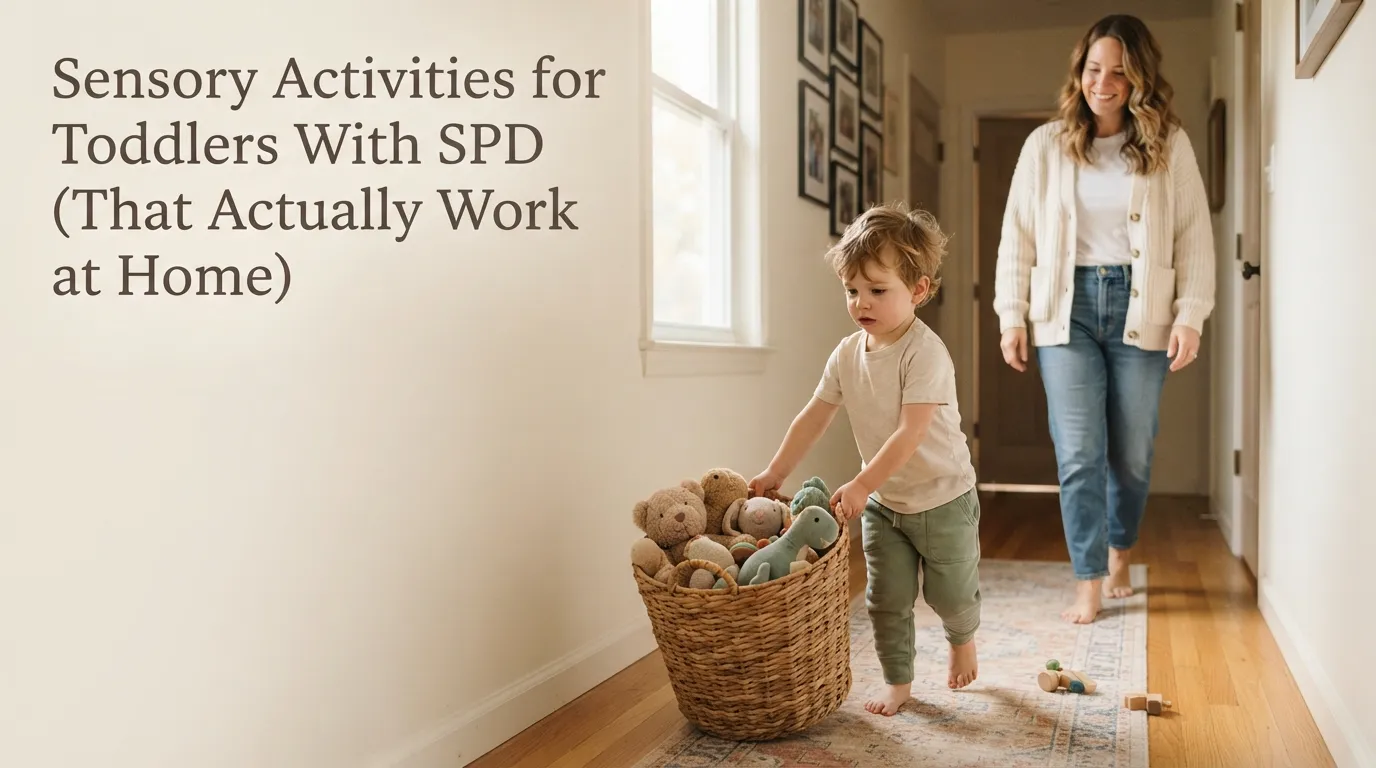
- Laundry basket pushes. Toss a few stuffed animals in and let him shove it down the hall. We called it “bear delivery.” He was dead serious about it.
- Wall push-ups. Stand facing the wall together and push “like you’re holding up the house.”
- Pillow burrito. Roll your child in a blanket, head out, and give a gentle squeeze. Ask first. If he wriggles away, that’s your answer.
- Carrying groceries. One bag of apples. Suddenly he’s the hero of the car.
A friend tried the basket trick on her three-year-old, who’d been ricocheting around the living room all morning. Ten minutes of hauling towels later, he was sitting on the floor stacking blocks. She texted me: “Why does nobody tell you this?” No idea. They should.
Messy play for kids who hate messy
I made a mistake early on. I plopped my son in front of a tray of cold, slimy cooked spaghetti because the internet said it was fun. He looked at it, looked at me, and left the room. Don’t do that.
Start dry. Rice, oats, or pasta shapes in a baking tray, plus a couple of cups and scoops. Nothing sticks, so there’s nothing to fear. Once he’s comfortable, offer tongs so his hands stay clean, and only then try something softer like kinetic sand.

The zip-top bag trick was our biggest win. Squirt some paint or hair gel inside, seal it, tape it to the window, and let him squish it with one finger. He got the feel of it without the slime on his skin.
Two sentences I said about a hundred times: “You don’t have to touch it, you can just look,” and “The towel’s right here.” Kids loosen up when they’re in charge. Some will only watch for weeks, and that still counts.
Movement that fills the tank
Some kids need to move before they can do anything else. Stop fighting that. A mini trampoline, a swing, or a cushion obstacle course before you leave the house can head off a meltdown better than any pep talk. One caution: fast, unpredictable motion can overwhelm a sensitive child, so watch his face, not the clock.
Winding down at night
Bedtime was our worst hour. What helped was starting early, about thirty minutes before lights out, with a warm bath, a firm towel rub, and a couple of quiet books in a dim corner.

A calm-down spot is worth setting up too, even if it’s just a tent and a few pillows. Introduce it when everyone’s in a good mood, never mid-meltdown, or it feels like a punishment. And skip the weighted blanket for a toddler unless an OT approves it. Safety guidelines for little ones are strict for a reason.
Sound and smell, the sneaky ones
Not everything is about touch. Hand dryers, blenders, and birthday songs can all be too much. Child-sized noise-reducing headphones saved our errands, and a quick warning (“the blender’s going to be loud in three, two, one”) takes away the ambush. If your daughter gags at the cleaning spray, believe her. Switch to unscented and move on.
Questions parents ask me
Is sensory processing disorder the same as autism?
No. Plenty of autistic children have sensory differences, but plenty of kids with sensory differences aren’t autistic. A developmental evaluation can sort out which is which.
How often should we do these activities?
Short and frequent beats long and rare. Ten minutes, a few times a day, is plenty. If you’re working with an OT, follow their plan over anything you read online, including this.
What if my toddler refuses everything?
Back up a step. Make it smaller, let him watch, or do it yourself while he hangs nearby. If the refusal is intense or is getting in the way of eating, sleeping, or leaving the house, call your pediatrician.
How do I know when to worry?
One picky eater or one tag-hater isn’t a red flag. Toddlers are weird. Look for patterns that last weeks and make daily life hard, and trust your gut. You know your kid better than any checklist does.
Do I need to buy special equipment?
Not at first. A laundry basket, some pillows, and a bag of rice will take you surprisingly far.
What I’d tell you over coffee
Watch your kid, not the schedule. If he’s lit up, keep going. If he’s glassy-eyed, shaky, or suddenly goofy in that wound-up way, switch gears.
Pick two or three activities and repeat them for a couple of weeks. Toddlers often need twenty tries before they trust something new.
And be easy on yourself. Some days the basket gets pushed and the afternoon runs like a dream. Other days you eat cereal for dinner (yes, in that same aisle, and yes, we survived the jingle) and call it a win. He doesn’t need a perfect routine. He needs you paying attention, and you clearly are.