
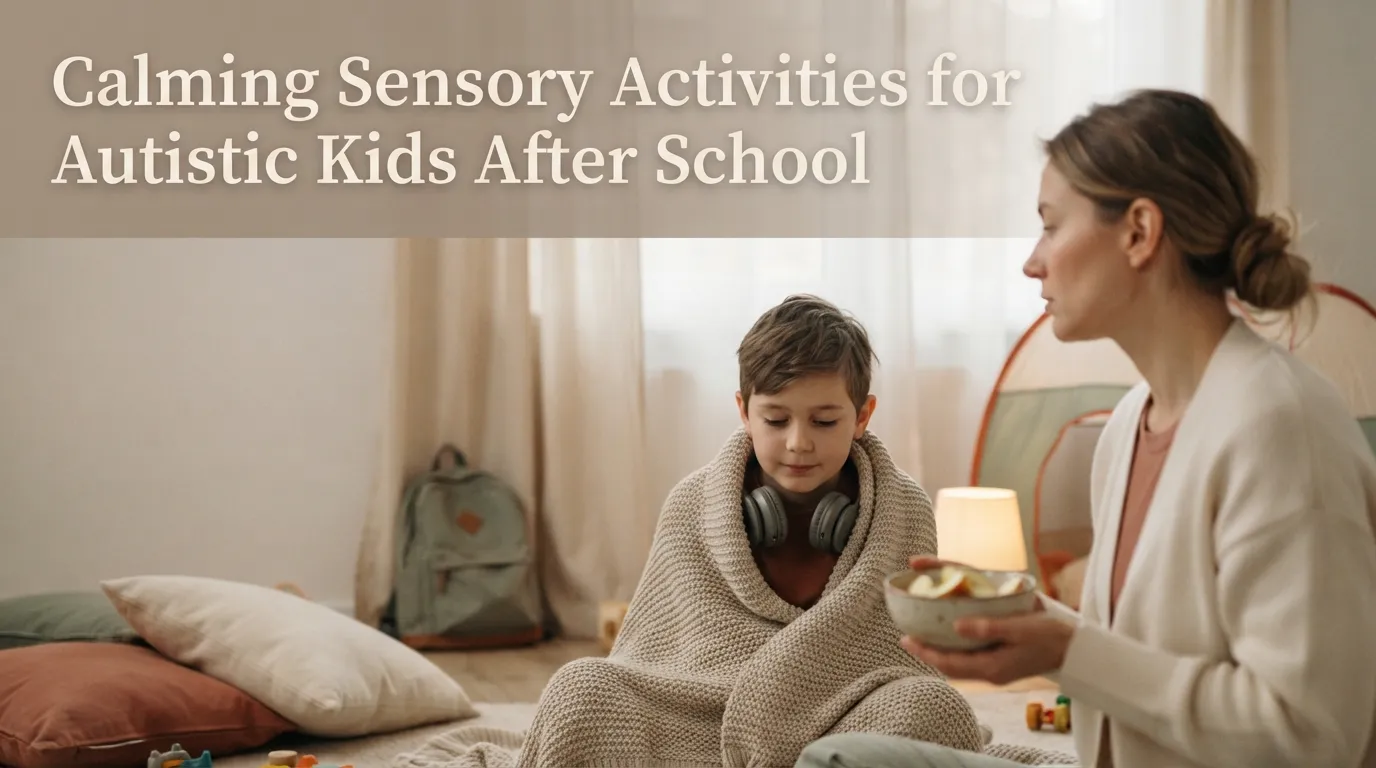
Calming sensory activities for autistic kids after school: pressure, quiet corners, and simple routines that ease afternoon meltdowns.
My son would come out of the building looking perfectly fine. He’d wave at his aide, hold the straps of his backpack, and walk to the car like a tiny commuter. I’d say something cheerful. He’d say nothing. And then, somewhere between the second stoplight and our driveway, he’d fall apart over a granola bar wrapper. The wrong wrapper. Crinkling too loud, apparently.
For months I took it personally. I figured I was doing something wrong, or that he was saving his worst behavior for me. The second part is sort of true, but not in the way I thought. He wasn’t saving up bad behavior. He was running on fumes after six hours of fluorescent lights, bell schedules, a loud cafeteria, and the nonstop work of figuring out what everyone around him wanted. By the time he reached me, he’d finally stopped holding it together.
If that sounds like your afternoons, I’m sorry. It’s exhausting for you too. But there’s a lot you can do, and most of it is simpler than you’d guess.
Why 3:30 Is the Hardest Hour
A lot of autistic kids mask at school. They hold in their stims, push through noise and itchy tags, and copy what other kids do so they won’t stand out. Nobody sees the effort, including teachers, who often say things like “he was great today!” while you’re peeling a sobbing kid off the back seat.
That’s not a contradiction. A great day at school can be the very reason for a terrible afternoon.
So here’s my first and most unpopular piece of advice: stop asking about their day. I know. It feels like the loving thing to do. But “How was school?” asks a depleted brain to sort, summarize, and report on six hours of events. Try “I’m glad you’re home” and then stop talking. Truly. Hand over a snack and let the silence sit.
For the first half hour, or sometimes an hour, nothing is required of your child. Homework can wait. So can the shoes by the door and the lunchbox you’ve asked about twice.
Watch for a Minute Before You Do Anything
Here’s what took me longest to learn. The same kid needs different things on different days.
Some afternoons my son wants to be squashed. Other days he can’t stand to be touched, and if I so much as brush his arm he flinches. Before you pull out any activity, spend sixty seconds just watching. A child who’s pacing, bouncing, or crashing into furniture is usually asking for movement or pressure. A child with hands over their ears, squinting at the lights, is asking for less of everything.
Calming sensory activities for kids who want pressure
Deep pressure helps many kids feel where their body ends and the room begins, which can quiet a whole frazzled nervous system. These are ones we’ve actually used.
The blanket burrito is our standby. Roll your child up snugly, head out, and let them lie there like a very serious caterpillar. By five or six, most kids will do it on their own.
Couch cushion squish is another. Your child lies on the floor and you press a couple of firm cushions on top, slowly, asking “more or less?” the entire time. Let them be in charge. It’s the asking that makes it feel safe.
Then there are wall pushes and chair push-ups: ten slow pushes against the wall, or pressing down on the armrests to lift the bottom off the seat. It looks silly and it works faster than it has any right to.
Weighted lap pads and blankets help plenty of families, though I’d go carefully. Pick one that fits your child’s size, make sure they can take it off by themselves, and ask your occupational therapist (OT) before using one for anything beyond short stretches. Heavier isn’t better.
For the kid who comes home buzzing
Not every autistic child crashes. Some come home wired, practically vibrating, and for them quiet time can make things worse.
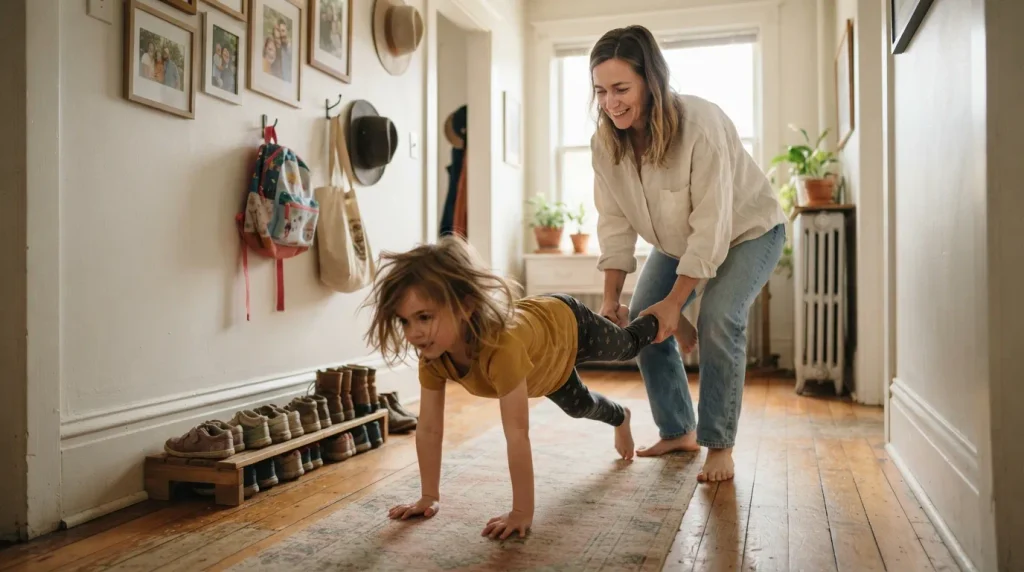
My daughter isn’t autistic, but she’s a sensory seeker, and the difference between the two of them taught me this lesson. When she gets home, we do wheelbarrow walks down the hallway. She goes on her hands, I hold her ankles, and by the end of the hall her shoulders have dropped an inch. Carrying groceries, pushing the laundry basket, jumping on a little trampoline, or crab-walking to the kitchen all do the same job. Teachers call it heavy work. I call it the thing that saves dinnertime.
If you can swing it, let them move before they even get in the car. Five minutes on the playground bars after pickup beats thirty minutes of whining on the way home.
For the kid who’s had too much
When a child is overloaded, don’t add. Subtract.
Switch off the overhead lights and turn on a lamp. Mute the TV, the radio, the dishwasher if it’s running. Offer noise-reducing headphones. A pop-up tent, or a pile of pillows in a closet with a flashlight, can feel like a deep breath. And please talk less. If you have to say something, keep it low and short: “Quiet corner’s ready when you are.”
Gentle Things to Do Once the Worst Has Passed
After the first wave settles, a calm activity can carry your child to dinner. None of these need explaining, and none need you hovering.
Warm water is a reliable one. A basin with cups and a sponge at the kitchen table, or a warm bath, works for nearly every age. My son is ten and still asks for the basin.
Playdough, putty, and kinetic sand give hands something to squeeze. If your child hates sticky textures, don’t argue the point. A stress ball or a lump of putty can be a perfectly good swap.
A shallow bin of dry rice with a few tiny toys buried inside keeps small hands busy forever. Put a sheet down first. I’m still finding rice in the couch from last spring.
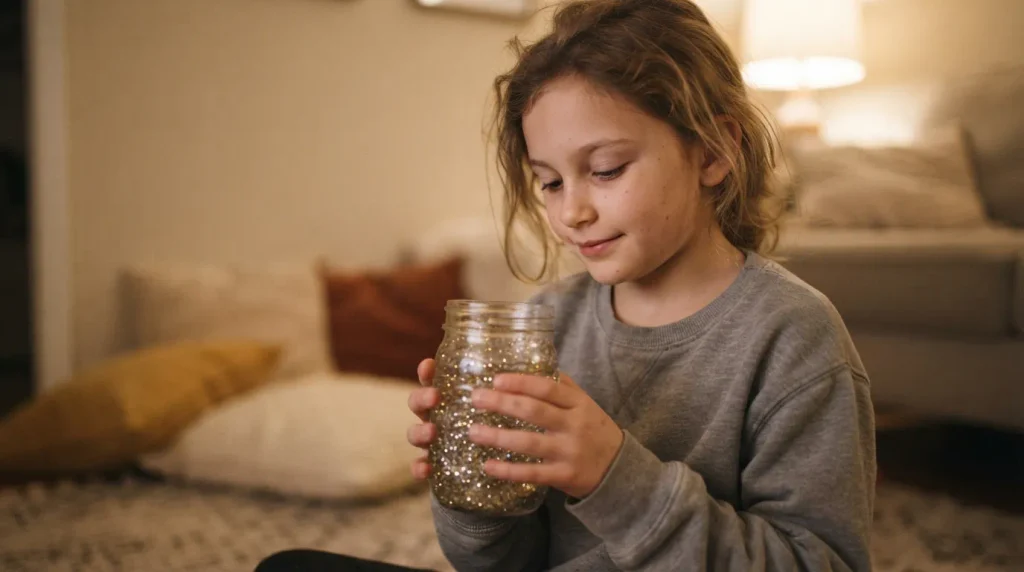
Slow visual toys, like glitter jars, lava lamps, and liquid timers, give the eyes something predictable to follow. A glitter jar is easy to make together: a clear bottle, warm water, clear glue, and glitter. Shake, watch, repeat.
Swinging and rocking are the quiet heroes here. A backyard swing, an indoor hammock, or just a rocking chair gives the steady rhythm many kids crave.
And don’t underestimate crunchy snacks. Chewing is organizing for a lot of children. Apple slices, pretzels, carrots, and dried mango all count, ideally with a cold drink and a straw.
Make the Afternoon Boring on Purpose
I used to think routines were for people who didn’t like fun. Now I’m a convert. When the afternoon looks the same every day, your child’s brain stops bracing for surprises, and that alone lowers the temperature.
Our version is not fancy. Shoes off, snack, twenty minutes in the quiet corner, something active, homework. That’s it. For younger or less verbal kids, a picture schedule on the fridge helps a lot. My son prefers a short written list he can check off himself, preferably while I’m in another room.
We also keep a “calm menu” taped inside the pantry door, just four pictures: blanket, swing, water, headphones. When his words run out, he points. It’s saved us from more than one standoff.
When Nothing Works
Some days you’ll offer the burrito and get a scream in return. That’s allowed. It doesn’t mean you failed or that the strategies are broken.
On those days, stay close and lower your voice. Cancel every demand you can. Don’t try to teach a lesson in the middle of a meltdown, because nobody’s home to learn it. Wait until the storm passes, then sit nearby and share a snack. You can talk about it later, or not at all.
It’s also worth talking to the teacher. Some schools can give a sensory break near the end of the day, a quieter dismissal, or a few minutes in a calm room before the bus. Those small changes shrink the wave before it reaches you.
Frequently Asked Questions
How long should the wind-down last?
Usually thirty to sixty minutes, sometimes longer. Watch for cues like asking for food, chatting, or picking something to do. That’s your sign they’re ready.
Is screen time okay during this window?
For plenty of kids, yes. If a favorite show lowers their shoulders, I wouldn’t fight it. The hard part is turning it off, so give a warning (“two more minutes, then snack”) and have something calming ready.
What if my child refuses everything I offer?
Stop offering. Too many choices can feel like more demands. Leave one option nearby, like a blanket or a bin of putty, and walk away. They often wander over on their own.
Are weighted blankets safe?
They can be when used carefully. Choose one that suits your child’s size, make sure they can remove it independently, and check with your doctor or OT before using one for sleep, especially with a young child.
Do I have to do this every day?
Consistency matters more than perfection. A five-minute version on a chaotic day still tells your child’s body what happens next.
When should I bring in an occupational therapist?
If afternoons are regularly rough, if your child is hurting themselves or others, or if you feel like you’re guessing and nothing sticks, an OT is worth calling. They can work out what your particular child needs.
What I Wish Someone Had Told Me
For a long time I thought my job was to fix the after-school meltdown. It isn’t. My job is to make the landing softer.
These days my son walks through the door, drops his backpack, and heads straight for the quiet corner without a word. I used to feel hurt by that. Now I feel something closer to relief, because it means he knows where he’s safe. I’ll bring the snack in a few minutes. Then we’ll talk, if he wants to.