My first sensory bin was a disaster, and I’m still a little embarrassed by it. Dried rice, a handful of plastic frogs, eight four-year-olds, no mat. Eleven minutes in, there was rice in the block corner, rice in a boy’s sock, and a girl named Priya cheerfully telling me the frogs had “gone swimming” across the floor.
I swept for twenty minutes that afternoon and nearly gave up on the whole idea. Then a teacher down the hall, a woman who’d been doing this since before I could drive, looked at my sad little pile and said, “Honey, it’s not the rice. It’s the tub.”
She was right. Once I fixed the setup, sensory play turned into the calmest part of our day.
Why Bother With Sensory Bins at All
Because four-year-olds learn with their hands. You can explain “heavy” and “light” until you’re hoarse, or you can let a kid fill one cup with beans and another with pom-poms and lift them both.
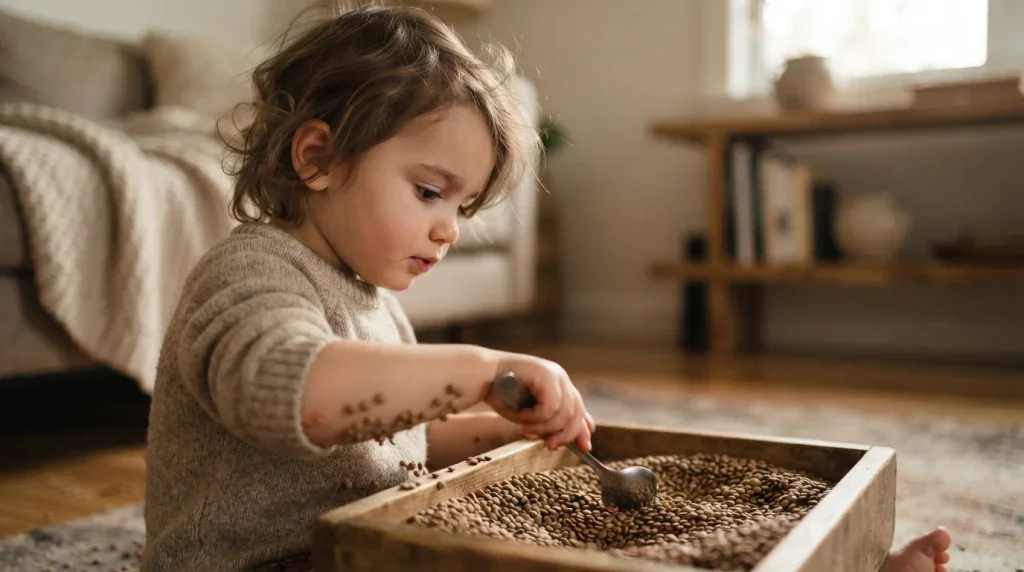
A bin also does quiet work you won’t see on a lesson plan. It builds the little hand muscles they’ll need for holding a pencil. It gives a shy child a way to stand next to someone without having to talk. And it gives your wiggliest kid somewhere to put it all. I had a boy, Mateo, who couldn’t make it through two minutes of circle time. Give him a tub of lentils and one dented spoon and he’d stay put for twenty.
My own two have road-tested most of what’s below on our kitchen table, so I can tell you which ideas survive real life and which ones only look good on Pinterest.
Fix the Tub Before You Fix the Filler
This is the part nobody tells you, and it matters more than any theme.
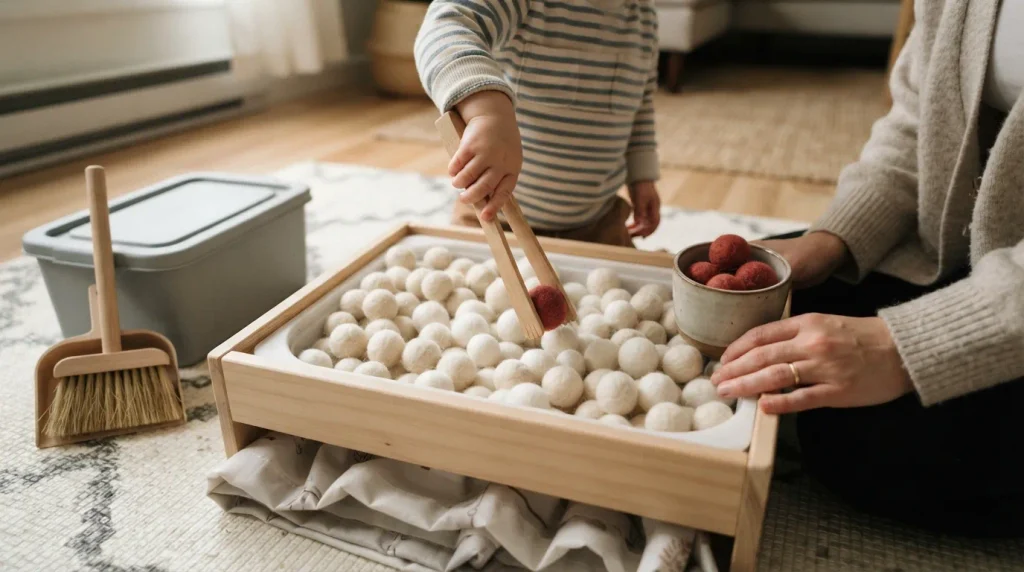
Use something wide and shallow with a lid. Deep bins turn into dumping stations, and the lid means you can put the whole thing away in ten seconds when the day goes sideways. Put a shower curtain or old tablecloth underneath. Keep a little broom and dustpan where small people can reach them, and make sweeping part of the routine rather than a punishment.
Cap it at three or four kids per bin. I know it’s tempting to squeeze in a fifth. Don’t. You’ll spend the whole center time refereeing who touched whose scoop.
And pick one rule. Mine is “What’s in the bin stays in the bin,” and I say it before anyone touches anything. Said ahead of time it’s just how we do things. Said after the first rice storm, it sounds like a scolding, and kids can smell that.
Sensory Bin Ideas for Preschoolers, Sorted by How Much You’ll Sweep
Gentle on your floors
Start here if your class has never done this before.
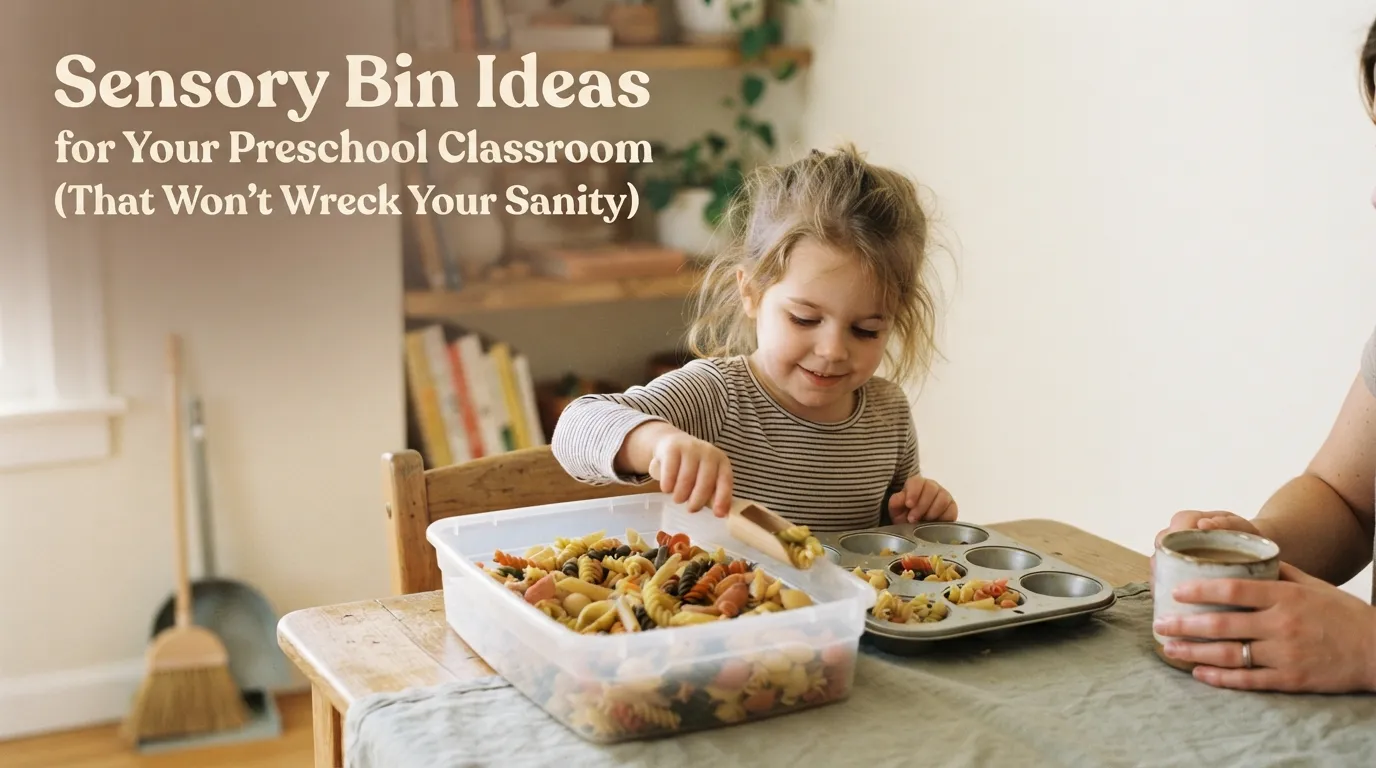
Dried pasta is the easiest win. Mix rotini, penne, and shells so the textures feel different, then add measuring cups and a muffin tin for sorting. Pom-poms with kitchen tongs are nearly silent and great for building the pincer grip. I ask kids to rescue all the red ones into a cup and count them with me, though some days they just want to move fluff around, and that’s fine too.
Kinetic sand is the one I’d buy if I could only buy one thing. It sticks to itself instead of your carpet. Add cookie cutters and a few plastic dinosaurs and you’re set for a week.
A little more cleanup, a lot more fun
Dried beans or lentils plus dump trucks is the classic for a reason. Every child wants to build a road, and nobody has ever needed instructions.
Colored rice looks fancy but takes five minutes. Stir a cup of rice with a teaspoon of rubbing alcohol and a few drops of food coloring, then spread it on a baking sheet to dry. Bury some magnetic letters in the rainbow batch and watch them dig like tiny archaeologists.
Water beads need a warning, and I’ll be blunt about it. Kids love the slippery little marbles, but they’re a real choking hazard once they swell, and they can be dangerous if swallowed. In a mixed-age room, or with any child who still puts things in their mouth, I leave them on the shelf. I’ve seen plenty of teachers use them without trouble, but it’s not a risk I’d take.
Messy, and worth every minute
Cornstarch and shaving cream, roughly two parts to one, makes a squishy dough that holds a shape for a minute and then collapses. Kids will squeeze it for an entire center rotation.
Cloud dough is eight cups of flour to one cup of baby oil. It feels like damp powder and packs like snow. Save it for a day when you’ve got another adult in the room.
And if you have any outdoor space at all, make a mud kitchen. Old pots, wooden spoons, a bucket of water, a patch of dirt. Nothing else I’ve tried comes close.
Tying Bins to What You’re Already Teaching
You don’t need a theme every week, and I’d skip the guilt if you don’t have one. But if you’re already doing oceans or farms, a bin can carry the lesson without a single flashcard.
For an ocean unit, dye rice blue and add shells and plastic sea creatures. For farm week, use oats or cracked corn with small animals and scoops. In winter, cotton balls and white pom-poms with big tongs make perfect “snowball” transfers. For letters, bury foam letters in sand and have each child dig up the ones in their name. In spring, fill a bin with soil, small pots, and big seeds like beans or sunflowers, and let them plant their own.
What to Say (and What to Skip)
You don’t have to run the activity. Mostly you narrate and wonder out loud.
“You filled that whole cup. What happens if you turn it over?” works well. So does “You’ve got a lot of green over there. Tell me about your pile.” Comments like these build more vocabulary than quizzing ever will.
The one thing I’d skip is “What color is that?” when a child is deep in concentration. It turns play into a test, and the spell breaks.
When It Goes Sideways
Some days the bin becomes a throwing contest. Don’t lecture. Put the lid on, say “The bin is resting, we’ll try again after snack,” and move on. Most kids get it after a round or two.
Then there’s the child who won’t touch anything sticky or wet. Please don’t push. Hand them a scoop or tongs, or start with dry fillers like pasta. My daughter avoided anything gooey until she was nearly four, and then one day she plunged both arms into a bowl of cloud dough like she’d always done it. Nobody had said a word to her.
Allergies and Safety
Check your class allergy list before you open the pantry. Wheat, peanut products, and some dried beans can be a problem for certain children, and it’s easy to forget when you’re grabbing whatever’s on the shelf.
For younger or mouthy kids, use pieces too big to swallow and stay close. If a child keeps tasting everything, switch to non-edible fillers like fabric scraps or smooth stones, and try the food ones again in a month or two.
Keeping It Fresh Without Giving Up Your Weekends
Rotate bins every week or two. Somewhere around week three of the same pasta, you’ll notice kids wandering off after five minutes.
Keep each bin in its own labeled tub with the tools tucked inside. Then setup takes two minutes instead of twenty, which is honestly the only reason I kept this up through one very long February.
Frequently Asked Questions
How often should preschoolers get sensory bin time?
Once or twice a week is plenty, with the bin as one of several center choices. Daily is fine if you rotate the contents and keep groups small.
What age is right for sensory bins?
Toddlers can enjoy them with close supervision and large, safe fillers. From three to five, you can add more tools, props, and themes.
How long will a child stay at one?
Ten to twenty minutes is typical, but I’d let the child’s interest decide, not a timer.
Is it okay to use food as filler?
Rice, pasta, and oats are popular, but some programs avoid food in sensory play. Check your school’s policy and allergy list, and keep a non-edible option handy.
How do I clean up without losing half my day?
Tarp underneath, broom within reach, and make cleanup a group job. A handheld vacuum is great for rice and sand, but kids can do most of it if you start the habit early.
What if they keep dumping everything out?
Try a shallower tub and less filler, and repeat your rule before play. Dumping usually means the bin has gotten boring, so swap the tools or theme.
Do I need to buy special supplies?
Not really. Spoons, cups, a muffin tin, and a bag of pasta will take you a long way.
Start Small
Pick one bin and one rule, and let the first week be a mess. By Friday, nobody will remember the frogs that escaped. They’ll remember the afternoon they got to dig.