Sensory play for kids with nut and egg allergies: safe ideas, hidden allergen traps, cleanup tips, and an FAQ from a parent who reads every label
I once stood in the craft aisle for twenty minutes, reading the back of a bird seed bag like it was a legal contract. I’d seen a gorgeous sensory bin online with seeds, scoops, and tiny plastic birds. Then I turned the bag over. Peanuts, sunflower kernels, and a “may contain” line longer than the grocery list on my phone.
That’s the thing nobody tells you about food allergies and play. The risk isn’t only at the dinner table. It’s in the bin, on the paintbrush, and under your toddler’s fingernails.
The good news is that sensory play for kids with nut and egg allergies is completely doable, and some of the best options are cheaper and simpler than the Pinterest versions. It just takes a different way of looking at your pantry.
Why Sensory Play Needs Extra Thought With Allergies
Little kids explore with their mouths. You can say “we don’t eat the rice” a hundred times, and a curious two-year-old will still test it on the hundred-and-first. Hands go into bins, then into mouths, then rub into eyes.
So the question isn’t just “is this safe to touch?” It’s “what happens if this ends up in my kid’s mouth, on their face, or on their hands at snack time?” Once you ask that, the decisions get easier.
One note before we go further. Follow the plan your allergist has given you, and keep your child’s emergency medication within reach during play, not in a bag across the room. Some kids react to skin contact, others only to swallowing, and you know your child’s history better than any blog does.
The Sneaky Culprits Hiding in “Normal” Activities
Some of these will surprise you.
Bird seed and trail mix blends. Many contain peanuts or tree nuts. Skip them entirely, even for outdoor play.
Egg cartons. They’re a classic craft supply, but the cardboard can hold residue from cracked eggs. I’d never use them with an egg-allergic child, and I’d pass on eggshell mosaics for the same reason.
Pasta. Plenty of dry pasta is egg-free, but fresh pasta and egg noodles are not. Read the ingredients every single time, even for a brand you’ve bought before. Recipes change.
Oats and cereal. These are often processed alongside tree nuts. Check for cross-contact warnings, or choose a brand made in a dedicated nut-free facility.
Oils, lotions, and soaps. Almond oil turns up in baby oils, bubble bath, and homemade sensory recipes. If a recipe calls for oil, use one your child already eats without trouble.
Store-bought dough and paint. Many don’t list nuts or eggs, but manufacturing practices vary by brand. If you can’t find a clear answer, make your own.
Sensory Play Ideas That Skip Both Allergens
These are the ones I come back to again and again.
Water play. Not glamorous, always a hit. A few cups, a funnel, and a soap you’ve checked will keep a toddler put for half an hour. A baking tray under the high chair gets you through a winter afternoon.
Oobleck. Two parts cornstarch to one part water. It’s weird, it’s messy, and kids under six will talk about it for days.
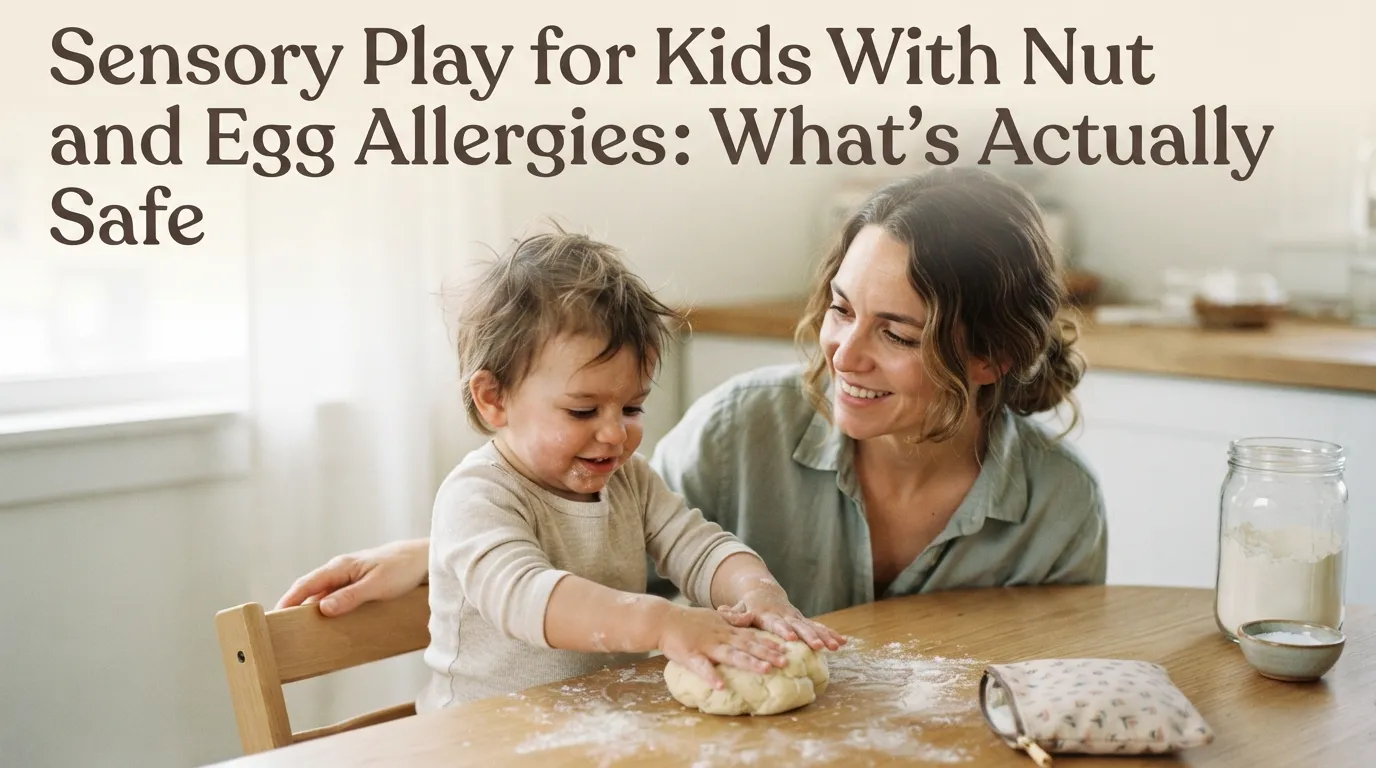
Homemade playdough. Flour, salt, water, a little cream of tartar, a splash of oil. It takes ten minutes on the stove, keeps for weeks in a sealed container, and you control every ingredient. I stopped buying it years ago. (If wheat is also an issue in your house, there are gluten-free versions.)
Sand and kinetic sand. Kitchen scoops, small trucks, a few plastic dinosaurs. Kinetic sand is usually fine, but check the label like you would with anything.
Ice rescue. Freeze small toys in a container of water, then hand your child a squeeze bottle of warm water to free them. It works from about eighteen months and costs almost nothing.
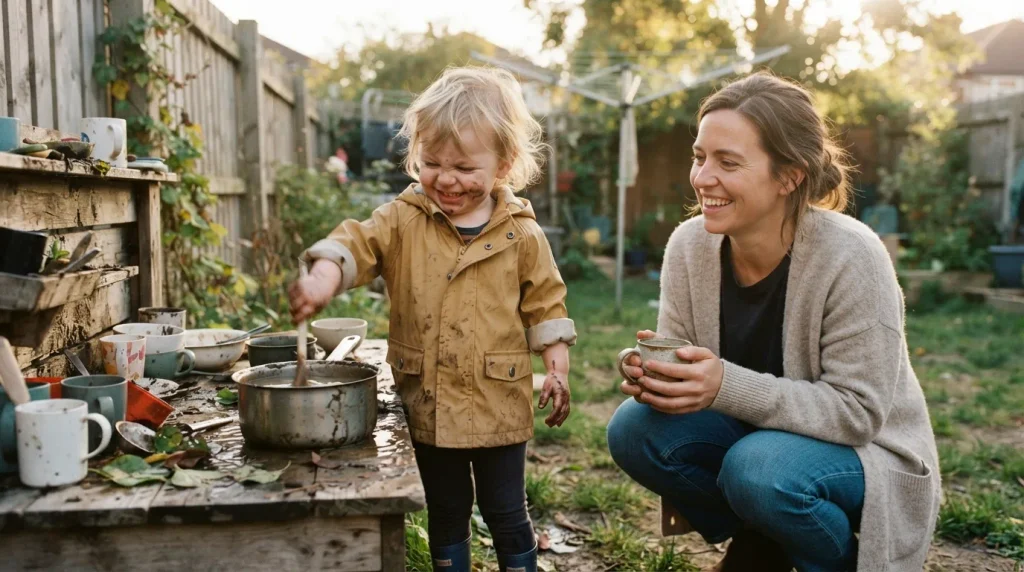
Mud kitchens. An old pot, a wooden spoon, a patch of backyard. You don’t need to buy a thing.
Taste-Safe Ideas for Kids Who Mouth Everything
Taste-safe doesn’t have to mean dull. Cooked spaghetti (egg-free, plain, cooled) is gloriously squishy with a drop of food coloring. Plain yogurt works as finger paint for babies, as long as dairy isn’t a problem for you. Mashed banana, cooked sweet potato, and warm oatmeal from a safe brand all make good messy bases.
Here’s what I wish someone had told me early: pick the safe base first, then build the activity around it. Don’t start with a pretty photo and try to swap ingredients afterward. That’s how you end up back in the craft aisle.
Cleanup Matters More Than You’d Think
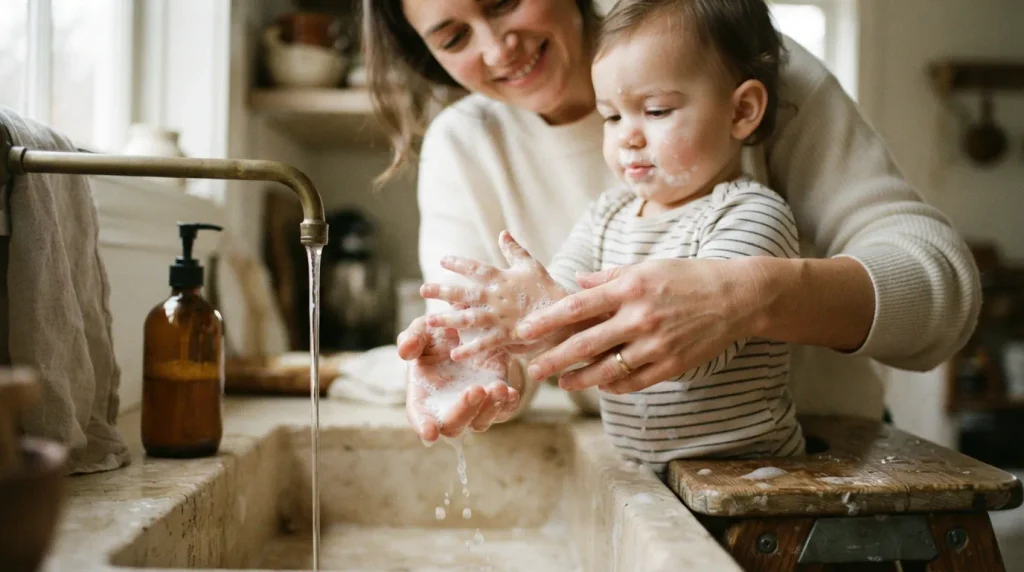
It’s easy to obsess over what goes into the bin and forget what happens after. Wash hands with soap and water before snacks and meals, because sanitizer doesn’t reliably remove food allergens. Wipe tables and high chair trays before food goes on them. Wash scoops and containers between uses, especially anything that’s been to a friend’s house or a classroom.
Playdates, Daycare, and Other People’s Kitchens
This is where most of us get nervous. A short, friendly script helps: “We’re keeping Max’s play stuff nut-free and egg-free today, so I brought a few bins.” Most parents say yes without blinking. A few will ask questions, and honestly, that’s a good sign.
For daycare or preschool, ask for the activity calendar ahead of time. If a teacher plans a sensory bin with oats or an egg-carton craft, you can offer a swap before the day arrives rather than finding out at pickup. Teachers generally appreciate the heads-up.
Talking to Your Child About It
Kids pick up on tone fast. If every activity feels like a minefield to you, it will feel that way to them.
With a toddler, keep it simple: “This one is safe for your body. That one isn’t.” With a preschooler, add a little more: “Some foods make you sick, so we check first. Then we play.” Say it matter-of-factly, like buckling a car seat. You’re building a habit of checking, not a habit of fear.
Quick Answers to Questions I Get a Lot
Can touching an allergen cause a reaction, or only eating it?
It depends on the child. Many kids react mainly when they swallow something, but skin contact can cause hives or redness in some, and traces can travel from hands to mouth. Your allergist can tell you how cautious to be with your child.
Is store-bought playdough safe?
Not automatically. Labels don’t always tell the whole story about cross-contact, and formulas change. Contact the manufacturer if you’re unsure, or make your own.
Are coconut or sunflower products okay for a nut allergy?
Many allergists treat these differently from tree nuts and peanuts, but it varies by child. Ask yours before adding them to a recipe.
Should I avoid food-based sensory play altogether?
Not necessarily. Plain, safe foods like cooked egg-free pasta or oatmeal can work well. If your child’s allergies are severe or you feel uneasy, water, sand, and ice are all lovely and worry-free.
What if my child touches something unsafe at a party?
Wash hands with soap and water right away, watch for symptoms, and follow your emergency plan. Keep calm, because your child will take their cues from you.
Check First, Then Relax a Little
I won’t pretend this takes zero effort. You’ll read more labels than the average parent, and you’ll say no to a few activities your friends’ kids love.
But once you’ve built your short list of reliable favorites, the checking gets faster and the worry gets quieter. Your kid still gets to squish, pour, dig, and make a gloriously terrible mess. And you get to sit on the floor beside them and let it be just play.