
Learn how to pick a baby name with practical tips for meanings, pronunciation, family traditions, and choosing a name you’ll love for years.
Choosing a baby name is an exciting part of preparing for your little one’s arrival, and you may already have a list of favorites saved. But a name that looks beautiful on paper may have an unexpected pronunciation, an awkward nickname, or a meaning you haven’t checked. In this guide, you’ll learn how to pick a baby name step by step, compare your favorite options, and choose a name that feels meaningful and practical for your family.
Key Takeaways
- Baby-name selection involves balancing personal preferences, meaningful traditions, pronunciation, and practical considerations.
- A clear list of priorities makes it easier to narrow down hundreds of potential baby names.
- Name meanings and origins should be checked using reliable references rather than assumed from online lists.
- Pronunciation and surname compatibility can help you identify awkward combinations, confusing spellings, and unwanted initials.
- Baby-name popularity data helps parents decide whether they prefer a familiar name or a less common choice.
- Partner communication makes the decision easier by helping both parents share preferences and agree on a shortlist.
- A simple naming checklist helps you compare your favorites without feeling pressured to find a perfect name.
What Does It Mean How to Pick a Baby Name?
Choosing a baby name is the process of selecting a name that reflects your family’s preferences, cultural background, personal meaning, and practical needs.
First, remember that choosing a name involves more than finding something that sounds beautiful. You might want a name connected to your heritage, a favorite family member, a meaningful tradition, or a personal experience.
For example, one family might choose Grace because it has personal significance, while another might prefer River because they love nature-inspired names. Both approaches are equally valid.
Moreover, your decision may include a first name, middle name, surname, and possible nickname. Thinking about the complete name from the beginning helps you understand how all its parts work together.
There is no universally correct way to choose a baby name. The best approach is to find a name that feels right for your family and works well in everyday life.
Why Does Choosing a Baby Name Matter?
Choosing a baby name matters because a name can reflect family identity, cultural traditions, personal values, and the preferences you want to celebrate.
First, a meaningful name can connect your child with their family history or cultural background. For example, you might choose a name that has been passed down through generations or honors someone important in your life.
At the same time, practical details deserve attention. A name that is easy for your family to pronounce, spell, and use comfortably may make everyday introductions simpler.
Moreover, it helps to imagine the name at different stages of life. Consider how it sounds when calling a toddler, introducing a school-age child, or addressing an adult in a professional setting.
However, you do not need to find a name that satisfies everyone. A child’s name does not determine their personality, achievements, or worth. Your goal is to make a thoughtful choice that feels meaningful and comfortable for your family.
How Do You Pick a Baby Name Step by Step?
The best way to pick a baby name is to identify your priorities, explore naming styles, create a shortlist, research your favorites, and evaluate how each name works with your surname.
Instead of searching endlessly through baby-name lists, follow these eight steps to make the process more manageable.
Step 1: Decide What Matters Most to Your Family
First, identify the qualities you want in a baby name before browsing hundreds of options.
For example, you might prioritize a meaningful origin, a short spelling, a connection to your culture, or a name that sounds good with your surname.
Write down your five most important preferences. These could include:
- Meaningful origins or family connections.
- Simple pronunciation and spelling.
- A classic, modern, or distinctive style.
- Compatibility with your surname.
- Cultural, religious, or personal significance.
Next, separate your must-haves from your nice-to-haves. This distinction helps you eliminate names that do not fit your priorities without overthinking every detail.
Step 2: Explore Different Baby-Naming Styles
Second, explore different naming styles to discover which ones appeal to you and your partner.
For example, if you love traditional names, you might consider Elizabeth or James. If you prefer nature-inspired choices, you might explore Willow or River.
Popular naming styles include:
- Classic names: Familiar names that have remained in use across generations.
- Modern names: Contemporary choices that suit your personal taste.
- Nature-inspired names: Names associated with plants, seasons, landscapes, or natural elements.
- Family names: Choices that honor relatives or preserve family traditions.
- Culturally significant names: Names connected to a language, heritage, or community.
- Gender-neutral names: Names that are used across genders, depending on cultural context.
In addition, explore names you might not have considered before. You could discover a meaningful option by looking beyond your usual preferences.
Step 3: Create a Shortlist of Your Favorite Names
Third, create a shortlist instead of trying to choose a final name immediately.
For example, each parent can independently write down ten names they like. Compare the lists afterward and identify names that both parents enjoy or want to consider further.
If you are choosing a name on your own, use the same process with your personal favorites.
Next, narrow the list to five to ten names. Keep a note of why each name appeals to you, whether it is the sound, meaning, family connection, or overall style.
A shortlist turns an overwhelming decision into a manageable comparison. It also gives you room to discover that a name you initially overlooked becomes a favorite later.
Step 4: Research Baby Name Meanings and Origins
Fourth, research each finalist’s meaning and origin using reliable references.
For example, you might find a name on a baby-name website and discover that different sources provide different explanations of its history. Check whether the information comes from a credible reference rather than repeating an unsourced claim.
Consider these questions:
- What is the name’s linguistic or cultural origin?
- What meaning is supported by reliable references?
- Are there different pronunciations or spellings?
- Does the name have a particular cultural or historical association?
- Does its meaning matter to your family?
Moreover, remember that names can have multiple origins or interpretations. Do not treat every meaning listed on a baby-name website as an established fact.
Step 5: Say the Full Name Out Loud
Fifth, say each finalist aloud with the intended middle name and surname.
For example, Lily Rose Bennett and Lily Rose Carter have different rhythms, even though the first and middle names are identical. The right combination depends on your preferences and the surname involved.
Test each name in everyday situations:
- Say it as if you are introducing your child.
- Call it aloud as you might at a playground.
- Write the complete name on paper.
- Try common nicknames and shortened versions.
- Check the initials for unintended words or awkward combinations.
In addition, ask a trusted person to pronounce the name if you are concerned about potential confusion. Their response may help you decide whether the pronunciation and spelling are practical for your family.
Step 6: Check Popularity and Uniqueness
Sixth, decide whether name popularity matters to you.
Some parents enjoy familiar names because they are recognizable and easy to pronounce. Others prefer less common names because they feel more distinctive.
For example, a parent who wants a widely recognized name might consult official popularity rankings, while a parent seeking something unusual might explore less frequently used options.
Neither approach is automatically better. Popularity is one consideration, not a measure of a name’s quality.
You can research U.S. name-frequency data through the Social Security Administration’s Popular Baby Names database. Remember that rankings can vary by year, location, and the population being measured.
Step 7: Choose a Name With Your Partner
Seventh, discuss your shortlisted names respectfully if you are making the decision with a partner.
For example, one parent might love a traditional family name while the other prefers something modern. Instead of immediately rejecting either preference, discuss what each person values about their choice.
Try this simple method:
- Each person selects their five favorite names.
- Compare the lists and identify shared preferences.
- Discuss names that matter deeply to either person.
- Score the remaining options using your agreed priorities.
- Create a final shortlist together.
You can also agree on a few boundaries, such as avoiding names that have a difficult family association or choosing a name that works in both parents’ languages.
Moreover, remember that family members may offer suggestions, but the final decision belongs to the parents or guardians responsible for naming the child.
Step 8: Give Yourself Time to Decide
Finally, take a short break before making your final choice.
For example, choose two or three finalists and revisit them after a few days. Say each name aloud, imagine using it regularly, and notice whether your preference changes.
You do not have to analyze every possible nickname or predict every future situation. Instead, look for a name that satisfies your main priorities and feels comfortable to use.
A thoughtful decision is more useful than an endless search for a name that meets every imaginable criterion.
What Factors Should You Consider When Choosing a Baby Name?
The most useful factors to consider when choosing a baby name are meaning, pronunciation, spelling, cultural significance, surname compatibility, nicknames, and popularity.
First, use the following comparison table to evaluate your finalists consistently.
| Factor | What to check | Example question |
|---|---|---|
| Meaning | Origin and verified meaning | Does the name have significance to us? |
| Pronunciation | How people may say the name | Can we pronounce it comfortably? |
| Spelling | How the name is written | Will we often need to explain its spelling? |
| Surname compatibility | Rhythm and complete-name combination | Does the full name sound natural to us? |
| Nicknames | Common shortened forms | Do we like the likely nicknames? |
| Cultural context | Traditions and associations | Does the name fit our background or intentions? |
| Popularity | How frequently the name is used | Do we prefer familiar or less common names? |
| Long-term use | Suitability across life stages | Can we imagine using it for an adult, too? |
How Do You Choose a Baby Name That Goes With Your Last Name?
A baby name works well with a surname when the complete combination feels comfortable to pronounce, write, and use.
For example, a longer surname might pair nicely with a shorter first name, while a longer first name might create a rhythm you prefer with a brief surname. These are personal preferences rather than strict rules.
In addition, pay attention to repeated sounds, rhyming combinations, initials, and possible unintended meanings. Say the full name aloud several times rather than judging the first name alone.
Should You Choose a Popular Baby Name or a Unique One?
A popular baby name may appeal to parents who value familiarity, while a less common name may appeal to parents who want something more distinctive.
For example, you might choose a familiar name because relatives can recognize and pronounce it easily. Alternatively, you might choose a less common name because it has a special personal meaning.
Neither choice guarantees a particular experience for your child. Focus on your family’s preferences instead of choosing a name simply because it is trending or uncommon.
What Are the Best Websites and Tools for Finding Baby Names?
Baby-name websites and reference tools help parents explore ideas, research name meanings, and compare popularity without relying entirely on memory.
First, decide what information you need. Some resources are better for popularity data, while others are useful for researching origins or discovering new naming styles.
1. Social Security Administration: Baby-Name Popularity
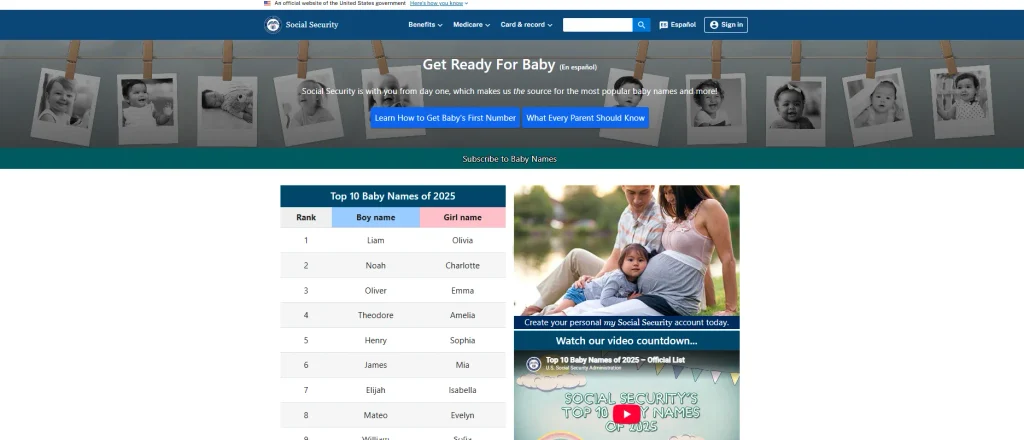
The U.S. Social Security Administration provides historical baby-name rankings based on U.S. Social Security card application data.
You can use its Popular Baby Names database to explore name rankings by year and understand how frequently names have been used in the United States.
2. Behind the Name: Name Origins and Meanings
Behind the Name is a reference resource for exploring the history, etymology, and usage of personal names.
Visit Behind the Name to research possible origins and compare information about names from different linguistic and cultural traditions.
3. BabyCenter: Baby-Name Inspiration
BabyCenter offers baby-name resources that can help parents browse ideas and explore different naming styles.
Visit BabyCenter to discover inspiration and build a preliminary list of names to investigate further.
Moreover, you can start with a free spreadsheet or notebook to compare your favorites. You do not need a paid tool to make a thoughtful decision.
How Can You Compare Your Favorite Baby Names?
A simple scoring system helps you evaluate names using the factors that matter most to your family.
For example, imagine that you are considering three fictional names: Avery, Clara, and Rowan. Give each name a score from one to five for meaning, sound, surname compatibility, and personal preference.
| Name | Meaning or significance | Sound | Surname compatibility | Personal preference |
|---|---|---|---|---|
| Avery | 4 | 5 | 4 | 4 |
| Clara | 5 | 4 | 5 | 5 |
| Rowan | 4 | 4 | 4 | 5 |
These scores are illustrative, not objective judgments about the names. Your own ratings should reflect your preferences and the actual surname you intend to use.
What Should You Do Next? Use This Baby-Name Checklist
A baby-name checklist helps you move from a long list of ideas to a manageable final selection.
First, save this checklist and work through it at your own pace.
- Write down your five most important naming priorities.
- Explore several naming styles and collect ideas.
- Create a shortlist of five to ten names.
- Check the meaning and origin of each finalist.
- Say each name aloud with the middle name and surname.
- Consider spelling, pronunciation, initials, and nicknames.
- Research popularity if it matters to your decision.
- Discuss your favorites with your partner, if applicable.
- Review cultural associations and relevant local naming rules.
- Choose a name that meets your priorities and feels right for your family.
Next, remember that the checklist is a guide, not a test you must pass perfectly. If a name feels meaningful and works well for your family, you do not need to eliminate it because it does not satisfy every optional preference.
Frequently Asked Questions About Choosing a Baby Name
How Do You Know When You Have Found the Right Baby Name?
You may have found the right baby name when it fits your main priorities, feels comfortable to say, and has personal meaning for your family. Give yourself time to consider the complete name before making a final decision.
How Can You Find Baby Names With Meaningful Origins?
You can find meaningful baby names by researching reputable name-reference websites, exploring family traditions, and considering names from languages or cultures that matter to you. Verify the origin and meaning instead of relying on unsourced claims.
Should You Choose a Baby Name Before Birth?
You can choose a name before birth if you feel ready, but you do not have to settle on one immediately. Some parents decide early, while others keep a shortlist until they feel comfortable making the choice.
How Do You Choose a Middle Name?
Choose a middle name that complements the first name and surname while reflecting your preferences, family connections, or cultural traditions. Say the complete name aloud and check the initials before deciding.
What Should You Avoid When Choosing a Baby Name?
Avoid rushing because of trends, accepting an unverified name meaning as fact, or choosing a name solely to satisfy other people’s expectations. Consider spelling, pronunciation, cultural context, and the complete name without expecting to predict every future experience.
Conclusion: Choose a Baby Name That Feels Right for Your Family
Choosing a baby name is a personal decision that becomes easier when you understand your priorities and follow a clear process.
First, explore different naming styles and create a shortlist. Then, research meanings, test pronunciation, consider surname compatibility, and discuss your favorite options with your partner if you are choosing together.
Most importantly, remember that there is no single perfect baby name for every family. A meaningful, practical choice that you feel happy using is a wonderful place to start.
Take your time, trust your preferences, and enjoy this special part of preparing for your little one’s arrival.
For more read parenting guide on Dailylittelsteps.