
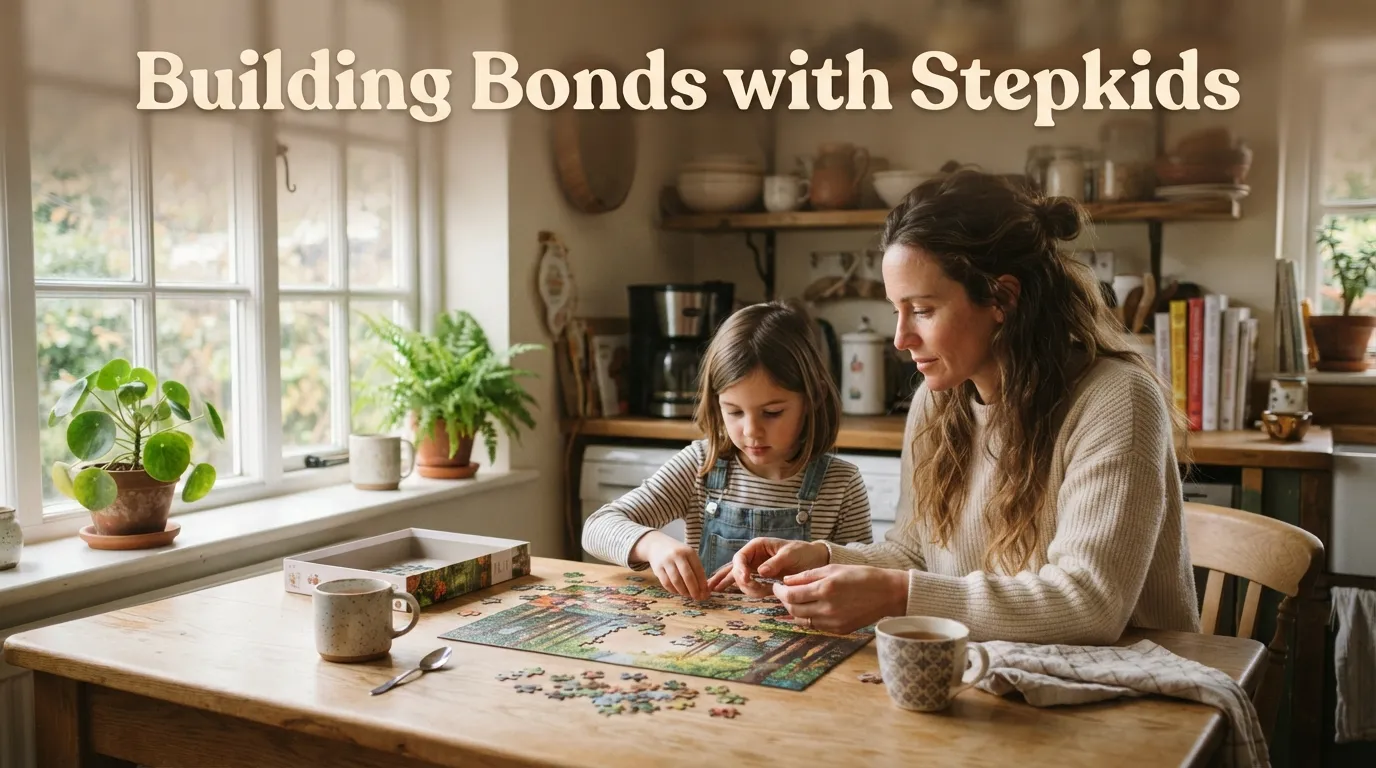
My friend Dana married a guy with two kids — 9 and 12 at the time — and about six weeks in she called me crying, not because anything terrible happened, but because the 9-year-old asked her to pass the ketchup and then said “thank you” in this careful, formal voice, like Dana was a substitute teacher nobody had properly introduced. That’s it. That was the whole crisis. A polite “thank you” that felt like a locked door.
I remember thinking, at the time, that she was overreacting. I don’t think that anymore. I’ve watched enough friends go through this to know that blended families run on a totally different emotional clock than the one you’re used to, and nobody hands you the new clock when you walk in the door.
You’re not building a relationship from nothing. You’re walking into one that already has furniture in it — arranged a specific way, by people who aren’t you, over years you weren’t there for. You don’t get to rearrange it. You get to live in it politely until, maybe, someone hands you a key.
Here’s what I’ve learned, mostly by watching other people get this right and wrong, and a little from my own house too.
Stop Expecting the Movie Montage
You know the one. Rocky start, one tearful heart-to-heart in a kitchen somewhere, and then suddenly everyone’s laughing around a Thanksgiving table like they invented family. I want to find whoever wrote that trope into a hundred sitcoms and ask them to babysit for a weekend.
Real bonding is slower and way less photogenic. It can take a couple of years — genuinely, two to four years is the range you’ll hear from people who study this stuff — before a stepfamily stops feeling like two households duct-taped together and starts feeling like one thing. That’s not you failing. That’s just what it costs to ask a kid to trust a new adult after their original family already came apart in some way, big or small.
So when your stepdaughter melts down over the “wrong” grilled cheese cut diagonally instead of straight across — and I promise you, something exactly this stupid will happen — that’s not about you. That’s a kid checking whether the ground is still solid.
Let Your Partner Handle the Discipline First
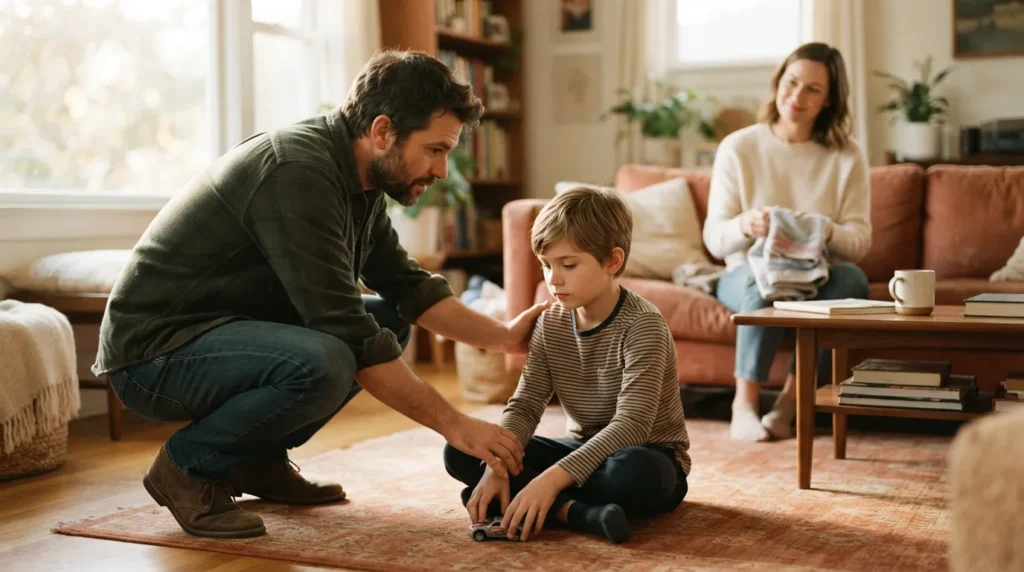
This is the mistake I see most, and I get why people make it. You move in, you already love this kid a little, you want to parent, so you jump straight into enforcing bedtime like you’ve earned that authority. You haven’t. Not yet. And kids clock the difference between an adult who’s earned the right to correct them and one who just showed up, almost instantly.
In the early stretch, let the biological parent be the one who sets and enforces rules. You back them up. You don’t lead. If your stepson blows off his homework, that’s your partner’s conversation to have — you can be in the room, you can care, but you’re not the one cracking down.
I know this feels passive. It’s not. It’s the slow way of earning something you can’t just claim by moving your toothbrush into the bathroom.
A line that’s saved a lot of stepparents: “That’s a conversation for you and your dad.” Said warm, not clipped. It tells the kid — I see the structure that already exists, and I’m not trying to bulldoze it.
Forget the Big Gesture. Look for the Boring Repeated One.
I used to think bonding meant effort — the zoo trip, the thoughtful gift, the planned “us” day. What actually worked for Dana had nothing to do with effort. It was puzzles. Every Sunday morning, while her husband slept in, she and the 9-year-old did a jigsaw puzzle on the kitchen table. No agenda. No forced conversation. Just two people doing something quiet in the same room, week after week, until it stopped being a big deal.
That’s the real mechanism, as far as I can tell. Not the grand gesture — the low-stakes repetition. Look for your own version:
- The drive to practice where nobody has to talk and that’s fine
- The one show you both watch without commentary
- A meal that quietly becomes “yours” together, no announcement needed
None of it requires the kid to say they like you. It just needs you to keep showing up in small, unglamorous ways until your presence stops registering as an event.
Don’t Trash the Other Parent, Even When You Really Want To
This is the one people resist hardest, especially when the other bio-parent is genuinely difficult — chronically late, inconsistent, whatever the specific flavor of frustrating happens to be. Doesn’t matter. A kid hears criticism of their other parent as criticism of some part of themselves, even when you’re technically right.
If your stepdaughter says “Mom lets me stay up till ten,” you don’t need to win that. You don’t even need to be diplomatic about it, really — just neutral. “Different house, different rule. Here it’s nine.” Flat. No commentary attached. She doesn’t need your opinion on her mother’s bedtime philosophy.
You’re allowed to privately think the other parent is doing it wrong. You’re just not allowed to make your stepkid carry that opinion around for you.
Let Go of the Word “Mom” or “Dad”
A lot of stepparents get fixated on the title — wanting to hear “Dad,” wanting it to feel official. I understand the pull. I also think chasing it too early is one of the fastest ways to stall the whole thing out.
Some kids land on “Mom” or “Dad” eventually, on their own timeline. A lot never do — they land somewhere in between, a first name, a nickname, something that’s theirs and doesn’t map onto anything you’d expect. That’s not a snub. That’s just a kid working out where you fit inside a family map that already existed before you arrived.
What matters isn’t the word. It’s whether the kid tells you things. Whether they seek you out. Whether they relax when you walk in the room instead of tensing up. A stepdad who gets called by his first name but gets a real, unprompted hug goodbye every morning is doing better than one who insisted on “Dad” and gets stiff politeness in return.
If It Still Feels Stuck
Sometimes months pass and it still feels cold, and that doesn’t automatically mean something’s broken. A kid can be quietly grieving something — the fantasy that their original family might get back together, the loss of one-on-one time with their bio parent, just the old routine — even while you’re doing everything “right.”
Keep the warmth coming without demanding it back. And if it stays genuinely stuck — real hostility, ongoing conflict, a kid who seems to be struggling in other parts of life too — a family therapist who works specifically with blended families is worth calling. Not because you failed. Because sometimes a third person in the room changes what’s possible.
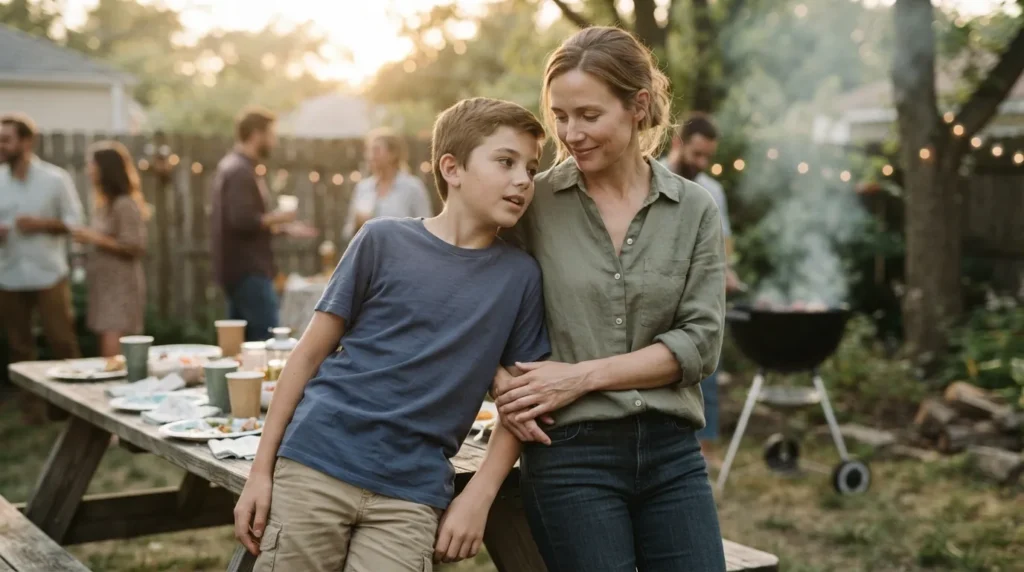
Building this kind of bond isn’t a project with a finish line you cross. It’s closer to growing something than building something — some seasons look like absolutely nothing is happening, and then one random afternoon your stepson leans his whole weight against you at a barbecue without even thinking about it, and you realize the ground shifted a while back. You just weren’t watching closely enough to catch the exact moment.