

Discover 10 unforgettable places to visit with kids before they grow up — real advice, best ages, and tips from a parent who’s been there.
I was folding laundry a few months ago when my son, who’s eleven now, asked if he could just get dropped off at his friend’s house instead of coming to his cousin’s birthday party. Totally reasonable request. Also a small gut-punch, because two summers ago that kid cried actual tears of joy over a hotel pool. That’s the whole thing about this window, isn’t it — it doesn’t announce itself closing. It just quietly does.
My daughter still calls suitcases “packing bags,” and I haven’t corrected her because I kind of hope she keeps saying it forever, even though I know she won’t. She’s seven. He’s eleven. The math on how much time I have left where they both still want to hold my hand at an airport is not in my favor.
So this list isn’t really about ticking boxes before college. It’s the stuff I keep coming back to — some from our own trips, some from years of swapping notes with other parents at pickup — that seems to actually stick with kids, long after they’ve forgotten the flight number or what grade they were in. A few of these we’ve done more than once. A couple I still haven’t managed, and I’m annoyed about it every year.
1. A National Park With Real Wildlife
Yellowstone, the Smokies, Glacier — pick one within driving distance and go. There’s something about seeing a bison in person, not on a screen, that rewires a kid’s sense of scale. Ours saw one from about forty feet away in a parking lot at Yellowstone, and my son still brings it up, unprompted, at random dinners.
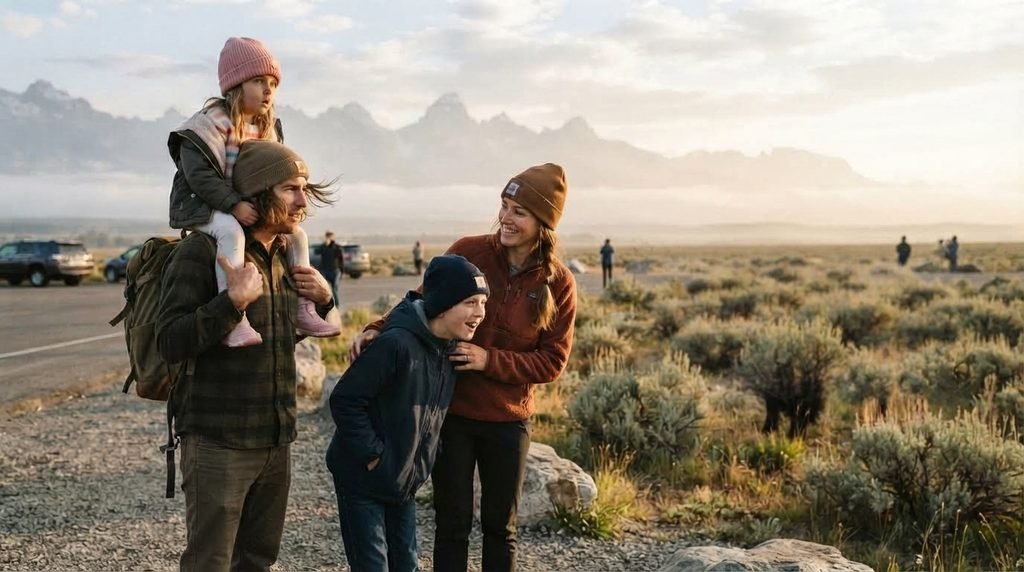
The sweet spot age-wise is 6 to 12. Younger than that and they’ll remember the snack more than the scenery — I say this having watched my daughter narrate an entire hike about the granola bar in her pocket while walking directly past a waterfall. Older than that and you’re fighting for phone time. Book lodging inside the park if you can. Waking up already there beats an hour-long drive before breakfast every single time, and yes, it costs more, and yes, it’s worth it.
2. Washington, D.C.
Say what you want about field trips, but D.C. genuinely delivers for families, and I say this as someone who went in expecting to be bored out of my mind. The Smithsonian museums are free, the monuments are open 24 hours, and there’s enough variety that a dinosaur-obsessed seven-year-old and a history-curious twelve-year-old can both leave happy. We spent an entire afternoon in the Air and Space Museum, which was not the plan, but nobody was complaining.
Go in spring or fall. Summer in D.C. is a special kind of humid misery with a stroller, and I learned this the hard way in July with a toddler who refused to wear a hat. Pace yourselves — two museums a day is genuinely plenty. Trying to “do” the whole National Mall in 48 hours is how a nice family trip turns into everyone snapping at each other by hour six.
3. Disney World or Disneyland — Once, At Least
I’ll take a stance here, because I have one: you don’t need to go every year, and honestly I side-eye the families who treat it like an annual pilgrimage. But going at least once during the “believing” years, roughly ages 4 to 9, is worth the cost and the chaos and the $14 popcorn bucket. There’s a specific magic to a five-year-old meeting a princess she’s watched on repeat for two years — my daughter went completely silent, which for her is basically a religious experience — that doesn’t translate to a ten-year-old doing the same thing half-ironically.
Skip the trap of trying to see everything, because you will fail and someone will cry, possibly you. Pick two or three “must-do” rides per kid and build the day loosely around those. Something like, “We’re doing Space Mountain and the teacups today, everything else is a bonus,” takes the pressure off before it starts.
4. New York City
We are decidedly not city people, which is exactly why I think New York matters. It teaches kids something no suburb can — that the world is big and loud and full of people who don’t look or live anything like them. The Natural History Museum alone justifies the flight; my son has asked to go back three times, and we’ve been once.
Ages 8 and up handle it best. The sensory overload can be a lot for toddlers — we tried it with a three-year-old and mostly remember a stroller getting stuck in a subway turnstile. Stay somewhere with easy subway access and build in real downtime. A rooftop nap-break in Central Park does more good than cramming in one more attraction, no matter how good the reviews are.
5. The Beach — A Real, Multi-Day Beach Trip
Not a day trip. An actual week where the biggest decision each day is which flavor of ice cream, and nobody’s checking a schedule. We’ve done the same stretch of the Outer Banks three years running, and I have zero guilt about the lack of variety. This is one of the few trips that requires almost no planning and still delivers every time.
Toddlers through teens all get something different out of it. Little ones love the sand and the shallow waves; older kids can boogie board, snorkel, or just disappear into a book on a towel for four hours straight, which, as a parent, is its own kind of vacation. Rent a place with a kitchen so you’re not eating out three meals a day. This isn’t optional advice, it’s a warning from experience.
6. A Working Farm or Ranch Stay
This is the one people are always surprised to see on a list like this, and it’s my sneaky favorite. We’re about as suburban as it gets, and a long weekend at a small family farm did more to tire my kids out, in the good way, than anything else we’ve tried. Collecting eggs, feeding goats, going to bed exhausted from actual physical effort instead of a screen — there’s no substitute for it.
Best for ages 4 to 11. Look for genuinely family-run operations rather than the big commercial “farm experience” places, which tend to keep kids at arm’s length behind a fence with a bucket of feed. The smaller ones let them actually get their hands dirty, and honestly, that’s the whole point.
7. A Trip to Where Your Family Is From
If you’ve got grandparents, cousins, or roots in another state or country, go there while your kids still care. This one isn’t flashy, and it won’t photograph well for anyone’s feed, but it’s arguably the most important entry on this whole list. My mother-in-law lives four states away, and every visit my kids have with her is one they’ll have to draw on later, whether they realize it now or not.
Kids as young as 5 start forming real, lasting memories of extended family, and by the time they’re teenagers, those relationships either already exist or they don’t. There’s no rebooking this one down the road. That’s not a guilt trip, just a fact I think about more than I’d like to admit.
8. The Pacific Coast or Any Tide-Pool Coastline
Somewhere with tide pools — Oregon, Maine, parts of California — gives kids a completely different relationship with nature than a typical beach vacation does. My daughter found her first sea star on a gray, freezing morning in Oregon, and the sound she made is genuinely one of my favorite parenting memories, right up there with actual milestones.
Go at low tide, obviously, and check tide charts before you leave home, not the morning of. Bring water shoes. Barnacles are no joke, and I say that as someone who learned it the hard way.
9. A Big City Zoo or Aquarium — But the Really Good Kind
Not every zoo is created equal, and I’ll admit our local one is honestly a little sad. It’s worth seeking out the ones known for immersive exhibits — San Diego, the Bronx Zoo, Georgia Aquarium — instead of settling for the closest option. This works across a wide age range too, from toddlers in strollers to tweens who will absolutely deny loving the otters and then stand there for twenty minutes anyway.
Buy tickets online in advance and go right at opening, no excuses. The difference between arriving at 9 a.m. and 11 a.m. is the difference between “quiet and kind of magical” and “swarmed, sweaty, and cranky by 11:30.”
10. Somewhere That Requires a Passport
It doesn’t have to be exotic, and I’d argue it shouldn’t be your first choice for one. Canada, Mexico, a quick hop to Europe if the budget allows — the point is giving your kids one experience of being somewhere genuinely unfamiliar, where the money looks different and nobody around them is speaking English. This is the one on the list we still haven’t managed to do as a family, mostly because passports for four people and the logistics of a longer trip keep getting shoved to “next year.” I’m calling myself out on it here as much as anything.
Do it once your youngest is old enough to actually remember it, generally 6 or older. It reframes how kids see the rest of the world in a way I don’t think anything else on this list quite matches.
A Few Honest Notes on Making Any of This Happen
You don’t need a big budget or a two-week window to check things off this list, and I’d gently push back on anyone who tells you otherwise. Some of the best family trip ideas are weekend-sized. What actually matters more than distance or cost is deciding this is the year you go, instead of waiting for the mythical “better” time that has a funny way of never arriving.
If money’s tight, prioritize based on the age windows that close first. The Disney magic years end. The believing-in-things years end, usually faster than you’d like. The wanting-to-be-seen-with-you-in-public years end too, unfortunately, sometimes overnight. National parks and passport trips can wait a little longer than princess castles and tide pools can — teenagers still enjoy a good hike, in my experience, even while pretending they don’t.
Frequently Asked Questions
What age is best to start traveling with kids? Honestly, any age works if you adjust what you’re expecting from the trip. Babies and toddlers won’t remember any of it, but they also travel lighter in some ways — no school schedule to work around, no strong opinions about the hotel. We took ours on a plane at four months old mostly out of necessity, and it was fine. The “memory-making” years most parents aim for start around 4 or 5, once kids can actually hang onto an experience long-term.
How do I choose between a big trip and smaller weekend getaways? Don’t treat it as either/or, because it isn’t. One bigger trip a year plus a handful of smaller weekend ones beats saving everything for a single giant vacation, in my experience. Kids don’t measure a trip by how far you drove to get there — a two-hour trip to a farm stay has left as strong an impression on my kids as a flight across the country did.
What’s the best way to keep young kids engaged on longer trips? Build in actual nothing time. This one took me embarrassingly long to learn. Overpacked itineraries backfire hard with kids under 10 — they need time to process what they just saw, not another activity stacked right on top of it. A slower pace with room for boredom and snacks and unstructured wandering almost always beats a schedule crammed full of “must-dos.”
Should I let older kids or teens help plan the trip? Yes, and it pays off more than you’d expect. Handing a 12-year-old the job of picking one restaurant or one activity gives them some ownership over the trip, and suddenly they’re a lot less likely to complain about the parts they didn’t get to choose. It also just makes the whole thing feel less like something happening to them.
Is it worth traveling internationally with young kids, or should we wait? It really depends on your specific kid and your own patience level more than any age chart will tell you. Some families do fine taking a toddler to Europe. We waited, mostly because I know myself and I know a transatlantic flight with a two-year-old would’ve broken something in me. If you’re unsure, a shorter international trip, four or five days, is a decent low-stakes way to test the waters before committing to something longer.
How far in advance should we plan a big family trip? For the major ones — Disney, national parks in peak season, anything overseas — 6 to 9 months out gets you the best pricing and availability. For smaller, closer trips, a few weeks is usually plenty. Honestly, the harder part isn’t the planning window. It’s just making the decision early enough that the trip doesn’t quietly fall off the calendar the way these things tend to.
One Last Thing
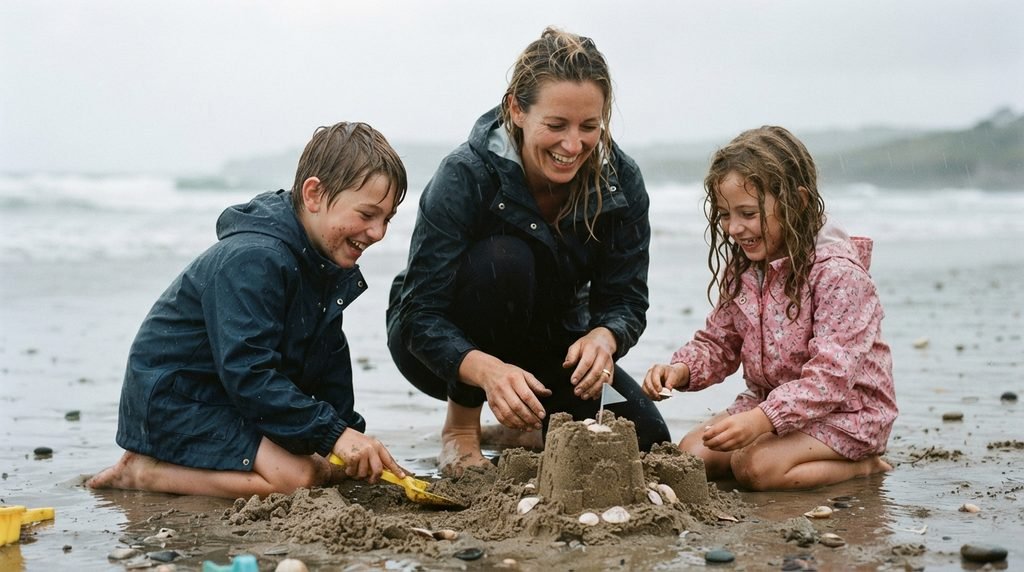
Nobody remembers the itinerary. My kids don’t bring up the museum exhibits or the ride wait times, no matter how carefully I planned around them. What they talk about, randomly, months later, is the time we got caught in a sudden downpour at the beach and just kept building the sandcastle anyway, soaked through, laughing about it. That’s the stuff that actually survives. The places on this list are just good odds — the right settings for the moments you can’t plan for, but that seem to show up more often when you bother to go somewhere new.
So don’t wait for the trip to line up perfectly. Book something, even the imperfect version of it. The kids growing out of caring happens a lot faster than the calendar makes it feel, and I say that as someone currently watching it happen in real time.