
Forty simple, low-cost activities to do with your baby at home, sorted by age from newborn to one year, using things you already own.
Around 3 p.m. on a gray Tuesday, my oldest was about four months old and I was done. Not in a dramatic way. I was just out of ideas, out of songs, and out of coffee. He was lying on the rug, ignoring a toy that had cost me thirty dollars, and staring at the TV remote like it held the secrets of the universe.
I handed him the remote. (Batteries out, obviously.) He was thrilled.
That was the afternoon I stopped believing babies need much. They need you nearby, some floor, and something slightly new to look at or bang on. Everything below is a version of that. I’ve sorted the list by age, but babies ignore schedules, so treat the ranges as rough. Stay close, keep small things out of reach, and remember that anything you hand over will end up in a mouth.
Fun Activities to Do With Your Baby at Home: Newborn to 3 Months
In the early weeks your baby is mostly watching and listening, and they sleep through half of it. Don’t overthink this stage. Slow and close is plenty.
1. Face-to-face talking. Hold your baby about 8 to 12 inches from your face, which is roughly where they can see clearly. Say something silly and then stop and wait. That pause is the beginning of a conversation, and it’s a little startling the first time you notice your baby is waiting for you.
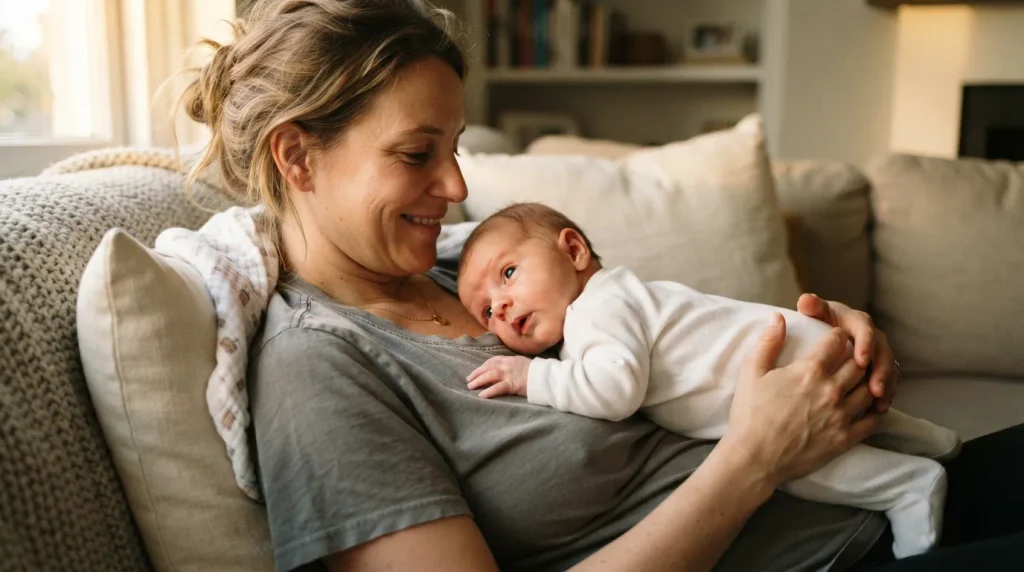
2. Chest tummy time. Recline on the couch and lay your baby belly-down on your chest. The floor can feel like a lot to a brand-new baby. You’re warm and you’re their favorite view.
3. Homemade high-contrast cards. Grab a thick marker and some index cards and draw stripes, circles, a lopsided checkerboard. Mine looked terrible and he adored them. Newborns respond to bold black and white long before they pick up softer colors.
4. The one song. Pick a single song and commit. You’ll get sick of it by week two, and your baby will just be getting started. I sang “You Are My Sunshine” so many times I can still hear it in my sleep.
5. Post-bath massage. Use a fragrance-free lotion and slow strokes down the arms and legs, with a little circle on the tummy. Keep your voice low. It’s a decent trick for the witching hour, though not a miracle.
6. Kitchen swaying. Put on something mellow, pick the baby up, and shuffle around the kitchen. It’s the same bounce-and-sway you were doing anyway, but now it counts as an activity.
7. Rattle on the left, rattle on the right. Shake a soft rattle on one side of their head and watch their eyes try to find it. It takes them a while, so be patient.
8. Tongue game. Stick your tongue out slowly and hold it there. Somewhere around six to eight weeks, some babies will try to copy you. Not all of them do, and that’s fine, but when it happens you’ll feel like you’ve witnessed a small miracle.
9. Window commentary. Carry your baby to the window and narrate the street like a bored sportscaster. “Garbage truck. Big one. Oh, and a squirrel.” Wind in the trees can hold a baby’s attention for a ridiculous amount of time.
10. Bicycle legs. With your baby on their back, gently pedal their legs. It can help with gas, and the little grunts they make are worth it.
3 to 6 Months
This is the stretch where your baby starts reacting to you on purpose. Smiles, squeals, and the first real laughs show up here, which makes the exhaustion feel a bit more worthwhile.
11. Mirror time. Prop an unbreakable baby mirror in front of them during tummy time. They’ll stare at that other baby as though they’ve met their new best friend.
12. Texture tray. Gather a silky scarf, a bumpy washcloth, a scrap of faux fur, and a crinkly bag. Let them feel each one while you stay right there and name it: soft, bumpy, crinkly. You don’t need to say anything clever.
13. Almost-reachable toy. Hold a toy just within reach and let them lunge for it. Let them win about half the time. Constant failure is no fun at any age.
14. Peekaboo with a muslin cloth. Drape it over your face, then pull it away with a big “There you are!” Do it forty more times. You’ll start to feel a little unhinged, and they will not get bored.
15. Pot-and-spoon drumming. Flip a pot upside down, give a wooden spoon a good bang, and then hand it over. Their early drumming is loud and random and wonderful. Your neighbors might disagree, so pick your hour.
16. Bubbles. Blow them slowly near the high chair or play mat and watch your baby follow them with their eyes. Some babies swat, some just stare. Both are correct.
17. Roll-over toy. When your baby is on their tummy, put a favorite toy a little off to the side to encourage a roll. Then cheer like they’ve won an Olympic medal, because in baby terms, they have.
18. Same book, silly voices. Pick one board book and read it daily. They won’t follow the story. They’re listening to your voice go up and down, and honestly that’s what matters. I did a very bad pirate voice for a month.
19. Airplane. Once their head control is solid, support their chest and belly and swoop them around the room with engine noises. Your arms will feel it the next day.
20. Sock puppet. Put a clean sock on your hand, maybe give it a drawn-on face, and let it talk. A four-month-old finds this endlessly hilarious. I can’t explain it.
6 to 9 Months
Sitting up changes everything. Hands are free, and your baby has discovered gravity and wants to test it on every object in the house.
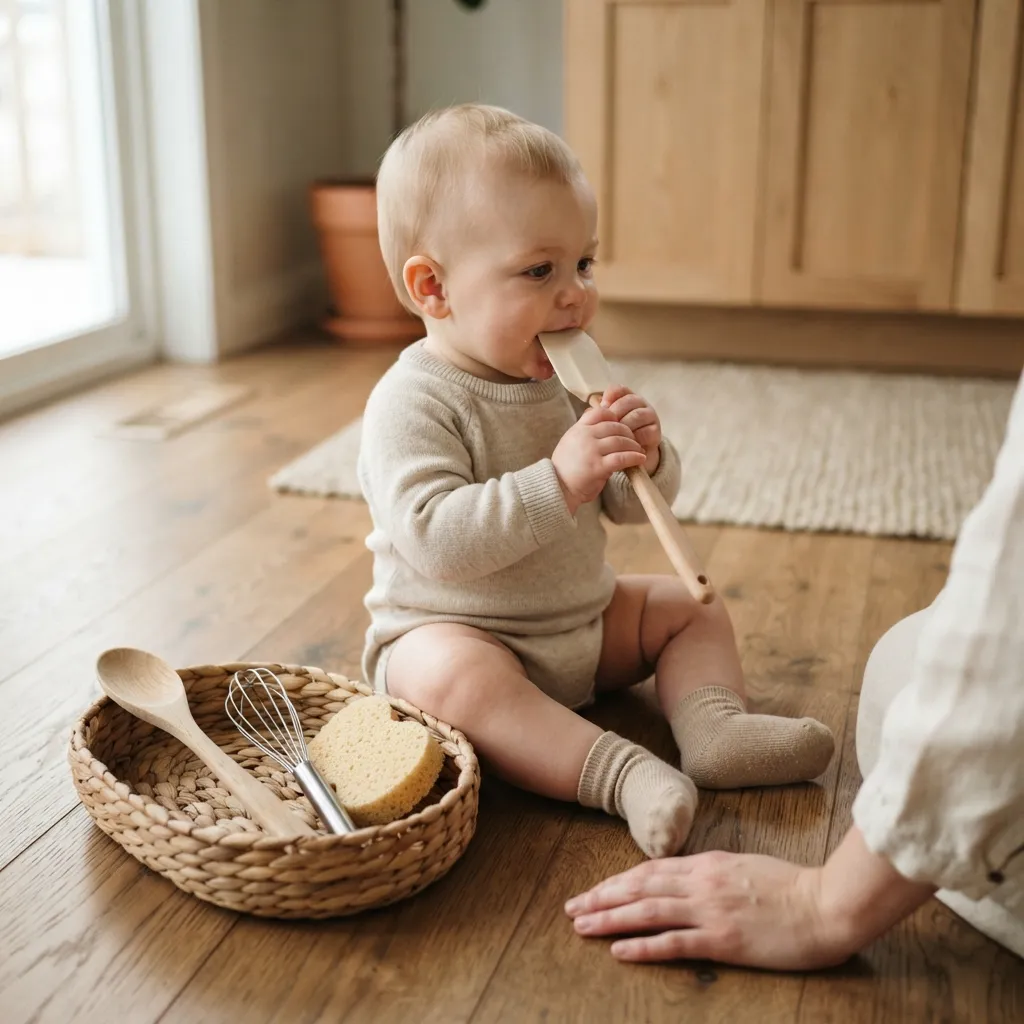
21. Treasure basket. Fill a shallow basket with safe kitchen odds and ends: a wooden spoon, a silicone spatula, a small whisk, a clean sponge. Nothing small enough to swallow. Rotate the contents weekly and it feels like new every time.
22. Drop and fetch. They drop the spoon from the high chair, you pick it up, they drop it again. It’s not a power move. It’s their first physics experiment, and it’s also a very tiring one for you.
23. Cardboard box tunnel. Cut both ends off a big box and let your baby crawl through or peek in. Sit on the other side and play peekaboo through the opening. The box was free, and it’s more popular than most toys.
24. Rolling a ball back and forth. Sit across from them with your legs in a V and roll a soft ball between you. At first it’s mostly them watching it roll away. Eventually, something clicks.
25. Bath cups. Give them a plastic cup and a little water in the tub for pouring and splashing. Never, ever step away, even for a second.
26. Food finger-painting. Plop a little mashed banana or yogurt on the high chair tray and let them go to town. It’s a mess, but I’ll defend it: it gets babies comfortable with food, and it keeps them happy for a long time.
27. Pat-a-cake. Take their hands and clap along. One day they’ll start clapping before you do, and you’ll realize they’ve learned something without you noticing.
28. Find the toy. Cover a toy with a blanket and let them pull it away. At this age they’re just starting to learn that things still exist when they’re out of sight.
29. Pillow mountains. Lay a few couch cushions on the floor and let your crawler climb. Stay right beside them and cheer at the summit.
30. Diaper-change songs. Ask, “Where’s your nose? Where are your toes?” and point as you go. It transforms the most dreaded part of your day into a game, and it works better than any distraction toy I tried.
9 to 12 Months
Now they’re on the move: pulling up, cruising along furniture, waving, and developing opinions about everything.
31. Stack and knock. Hand over plastic cups or pot lids to stack and nest. Mostly they’ll knock them over, and that’s the point.
32. Couch cruising. Line a few toys along the edge of the couch and let them shuffle from one to the next. No pressure and no pushing, just a nudge toward standing.
33. The laundry basket game. Give them a basket and a handful of soft balls, big blocks, or rolled-up socks. They’ll fill it, dump it, and repeat for twenty minutes. I once finished an entire cup of coffee while it was hot because of this game.
34. Table wiping. Give them a damp washcloth and let them “clean” the table. They love copying whatever you’re doing, so you might as well put it to work.
35. Sensory bottle. Fill a clear plastic bottle with water, a few drops of food coloring, and some glitter. Seal the cap with strong glue and tape, check it regularly, and toss it the minute it looks worn. It’s a calm-down trick for the car, too.
36. Homemade band. Hand over a wooden spoon, a tambourine, or a small drum and play music they like. They’ll bang on it no matter what, so you may as well enjoy the soundtrack.
37. Ball back and forth. Sit a few feet away and roll the ball to them. Wait for them to send it back, even if it veers off toward the dog.
38. Family photo book. Fill a small album with photos of relatives and pets and flip through it together. Point and say, “That’s Grandma! There’s Grandpa! Where’s the dog?” Mine started pointing at faces long before he could say any of the names.
39. Waving practice. Wave bye-bye to everything: the mail carrier, the cat, the stuffed bear. One morning they’ll wave back and you’ll nearly cry into your cereal.
40. Scarf pull. Stuff a few lightweight scarves into an empty tissue box and let them yank them out one at a time. It’s the cheapest toy in this list and probably the most popular.
A Few Honest Thoughts
You don’t have to do all of these. You don’t even have to do one a day. Some of my best afternoons with my kids at this age were spent lying on the rug doing absolutely nothing, and babies need that quiet too. When they look away or start to fuss, they’re telling you they’re finished. Listen.
Pediatricians generally advise keeping screen time to a minimum for babies this young, and I’m happy to lean on that, because a wooden spoon and your own face will beat any app. They simply can’t compete.
Pick two or three that sound doable and try them tomorrow. Drop whatever your baby ignores, since this isn’t a test. And keep singing the song they love, even if you hit round one thousand. They’ll outgrow it faster than you expect, and you’ll miss it more than you’d think.