I’m going to be honest about something most parenting posts skip over: for the first few weeks of daycare, I was bad at this. Like, genuinely bad. I thought I could wing it the way I winged everything else with my first kid. Turns out drop-off doesn’t reward winging it. It rewards boring, repetitive, slightly obsessive routine — the kind of thing that sounds unglamorous until you realize it’s the only thing that actually works at 7:40 a.m. with a toddler attached to your leg.
So this isn’t a “10 tips for a smoother morning” list pulled out of thin air. This is what I actually changed after watching my daughter go from daily meltdowns at the cubby wall to walking in like she owns the place.
Why Drop-Off Hits Different Than Any Other Part of the Day
Nobody warns you how physically hard it is to peel a crying toddler off your shirt and just… leave. You know logically she’ll be fine in four minutes. Her teacher, Ms. Renee, told me this more times than I can count, and she was right every single time. But knowing it and feeling it while your kid is wailing your name across a classroom are two very different things.
Part of what makes mornings so brutal is that there’s zero room for error. You’ve got one shot to get shoes on, bags packed, teeth brushed, and everyone buckled before a hard clock — daycare closes its doors at a certain time, your job starts at another, and babies have never once respected either.
Start Doing This the Night Before (I Resisted It for Way Too Long)
I used to think “prep the night before” was one of those tips that sounds nice in theory but nobody actually does. I was wrong. It’s the one thing that changed everything for us, and I say that as someone who does not enjoy extra chores at 8:30 p.m. when all I want is to sit down.
Here’s what lives by our front door now, packed the night before, no exceptions:
- Daycare bag: diapers, wipes, a full change of clothes, bottles or food containers, labeled (learned that one the hard way after a mix-up with another kid’s sippy cup)
- Tomorrow’s outfit, picked out and laid flat — nothing with buttons, nothing that takes two adults to get on
- Bottles pre-measured or pump parts washed and ready to assemble, not soaking in the sink
- The diaper bag itself, sitting by the shoes, not upstairs where I’ll forget it exists until I’m already in the car
None of this takes more than ten minutes. But ten minutes at night versus ten panicked minutes in the morning is the difference between a calm house and me yelling “WHERE IS THE OTHER SHOE” into the void.
The Morning Sequence That Stopped the Tears
Toddlers don’t need variety in the morning. They need the opposite — the same five things happening in the same order, every single day, like clockwork they can set their little internal clocks by.
Ours goes: wake up, diaper, clothes, breakfast, two minutes of a specific song (currently “Wheels on the Bus,” God help me), shoes, out the door. It sounds almost too simple to matter. It matters enormously. Once my daughter learned the pattern, she stopped fighting each step because she already knew what came next.
For Babies Under a Year
Keep it sensory and repetitive rather than structured around choices. Same car song on the way, same blanket for the crib, same soft transition each time. Babies this age aren’t tracking a schedule — they’re tracking familiar sounds and textures, and that’s enough to anchor them.
For Toddlers
You can start layering in tiny choices without blowing up your timeline. “Blue cup or the dinosaur cup?” gives them a sliver of control, which — if you’ve ever negotiated with a two-year-old — you know is worth its weight in gold some mornings.
Give Yourself a Buffer You Don’t Plan to Use
I planned our mornings down to the exact minute for way too long, and it never once worked, because kids don’t run on minutes. They run on “there’s a blowout right as we’re walking out the door” time.
Now I build in fifteen extra minutes I genuinely don’t expect to need. Some days it just sits there unused, which feels great, honestly. Other days — the “I only want to wear the shirt that’s currently in the wash” days — it’s the only reason we’re not sprinting through the parking lot.
And here’s the thing nobody tells you: your rushing is contagious. If you’re frantic, your kid feels it and gets clingier, not less clingy. Slowing yourself down, even artificially, changes the whole tone of the morning.
Make the Goodbye Short — Even If Every Instinct Says Otherwise
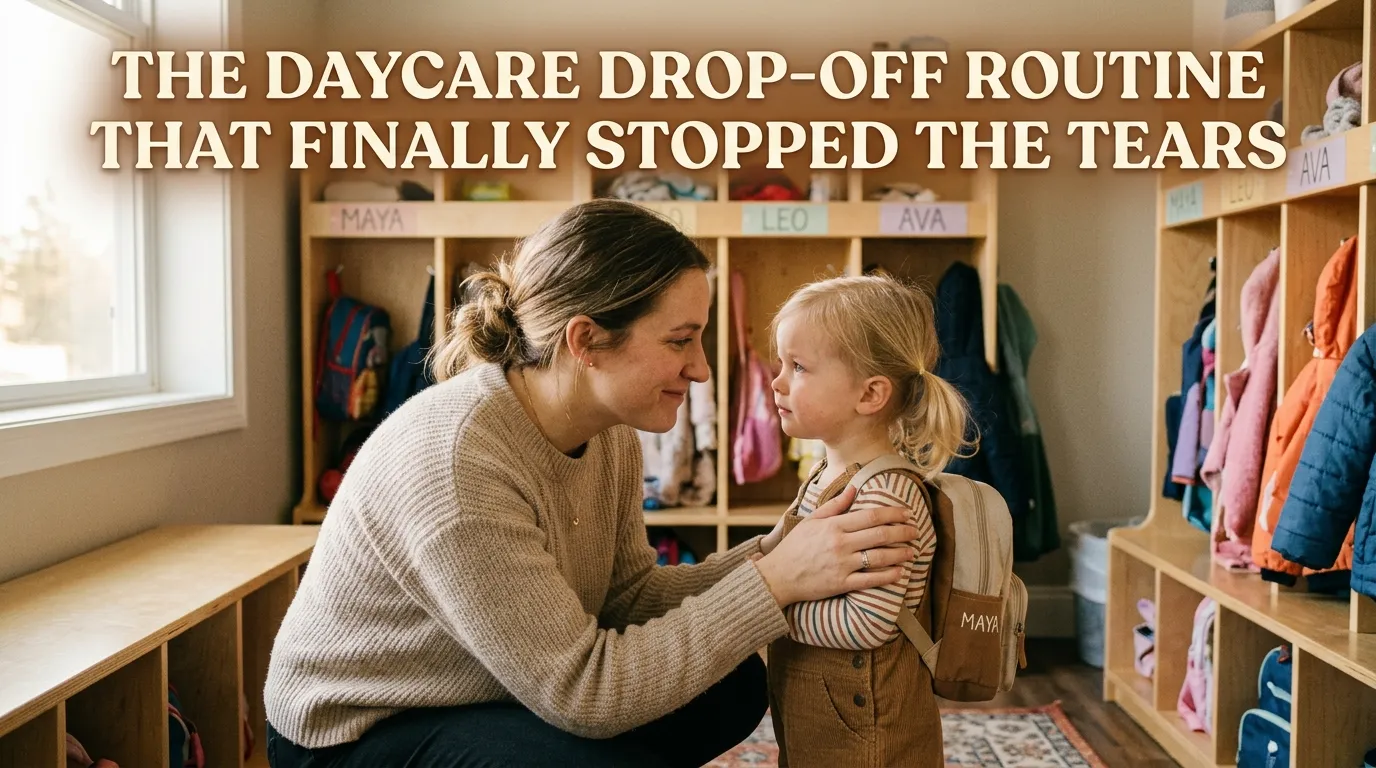
This was my biggest mistake early on. I used to linger. I’d hover by the door, go back for one more hug, ask her teacher a dozen questions while my daughter clung to my leg getting more and more worked up. It felt loving. It was actually making things worse.
The long goodbye gives kids more time to read your anxiety and mirror it back at you. What worked instead was almost uncomfortably short and the same every time:
“I love you. I’ll see you after nap time. Have a great day with Ms. Renee.”
One hug. One kiss. Hand her off. Walk out. Even with tears — especially with tears. Most kids stop crying within a few minutes of you actually leaving, even though it never feels that way when you’re the one walking to the car with your throat tight.
If your toddler’s old enough, swap “later” for something specific. “After lunch” or “after story time” means something concrete to a two-year-old. “Later” means nothing.
When Drop-Off Stays Hard Longer Than You Expect
Some kids adjust in a few days. Ours took closer to a month, and it got worse before it got better — right around the separation anxiety stretch that tends to show up around 8 to 10 months and sometimes comes back around 18 months.
A few things that actually helped during that rough patch:
- A small comfort item — she had a specific blanket that smelled like home, and her classroom let her keep it in her cubby
- Sticking with one parent doing drop-off consistently, instead of alternating, which just added more unpredictability to an already unpredictable transition
- Talking honestly with her teacher, who could tell me — because she watches this every day — whether the crying was five minutes of adjustment or something lasting longer
- Not sneaking out without saying goodbye, even though it’s tempting. It avoids the tears in that moment but tends to make kids more anxious about you vanishing without warning later
The Car Ride Matters More Than You’d Think
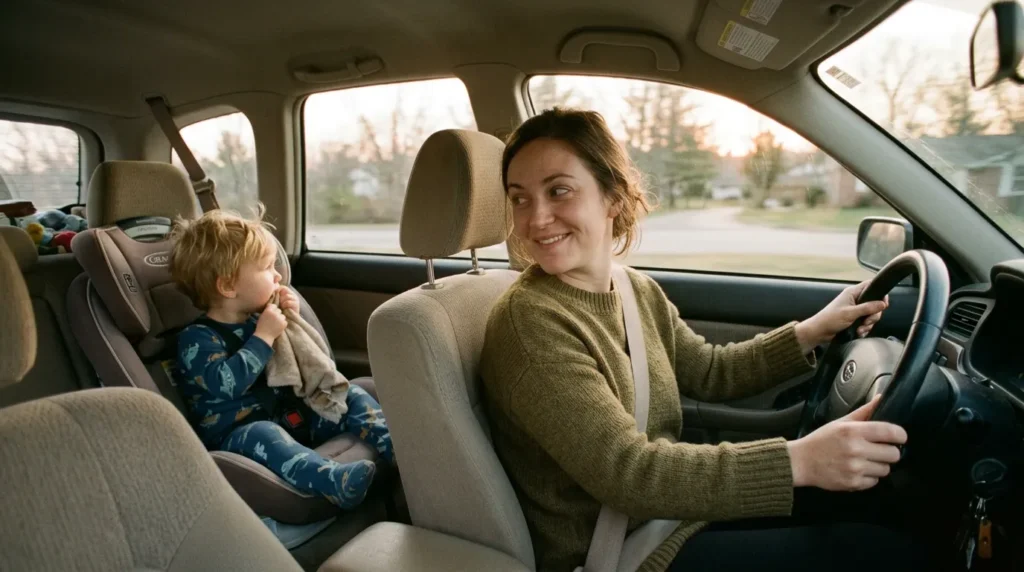
This one surprised me. A calm, quiet car ride — a familiar song, a little narration of what’s coming (“we’re going to see Ms. Renee, then you’ll have breakfast, then Mommy goes to work”) — sets the tone before you’ve even parked. A chaotic, rushed car ride almost always leads to a rougher drop-off. Cause and effect, every time.
Nobody Talks About How Hard This Is on the Parent
It’s not just your kid who’s adjusting. Watching your child cry, even when you know she’ll be fine in minutes, sits with you. I used to text the front desk an hour later just to check in. Some days that helped. Some days it just reset the worry all over again, so I stopped. Figure out what actually settles you versus what feeds the anxiety loop — they’re not always the same thing you’d assume.
Small Things That Added Up More Than I Expected
- A spare outfit and extra diapers that live permanently in the car, for the mornings the bag gets forgotten
- A written checklist taped inside a cabinet for the first few weeks, until the routine became automatic
- Clothes chosen with 7 a.m. in mind — no fifteen tiny buttons, no shoes that need negotiating
- If two parents split drop-off, using the exact same goodbye phrase, so your kid hears consistency no matter who’s dropping them off that day
It Does Get Easier — I Promise
I wish someone had told me, back during that first rough month, that this genuinely improves. Once we locked in the same sequence, same goodbye words, same “see you after nap time,” the daily crying mostly stopped. Not every morning is smooth even now — some days still go sideways, and that’s just how it goes with small kids. But the meltdowns became the exception instead of the rule.
Drop-off doesn’t have to be the worst part of your day. With a routine that’s a little boring and a lot consistent, most families find their groove eventually. And when you do, those mornings stop feeling like something you’re bracing for and start feeling like, well — just Tuesday.